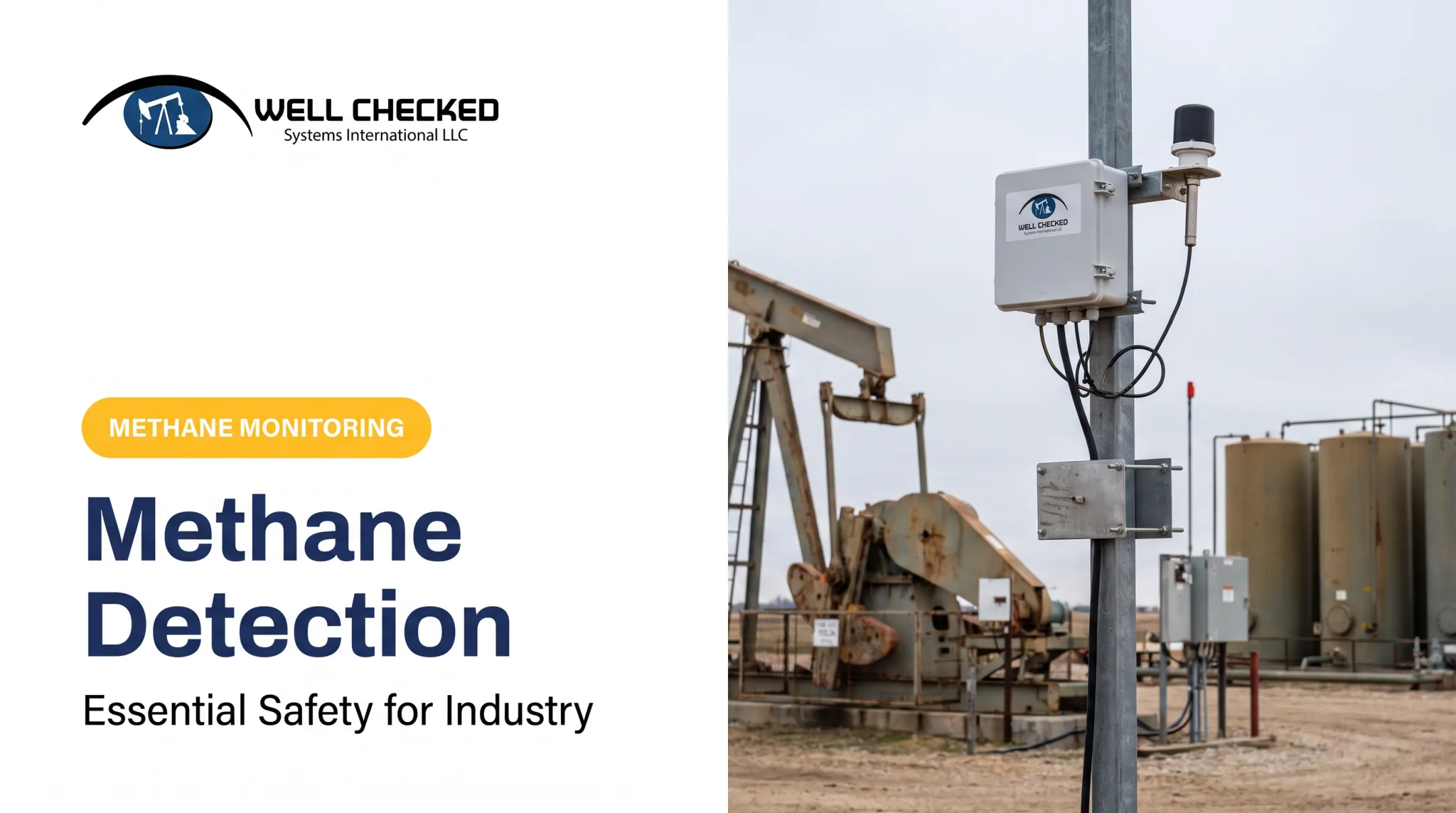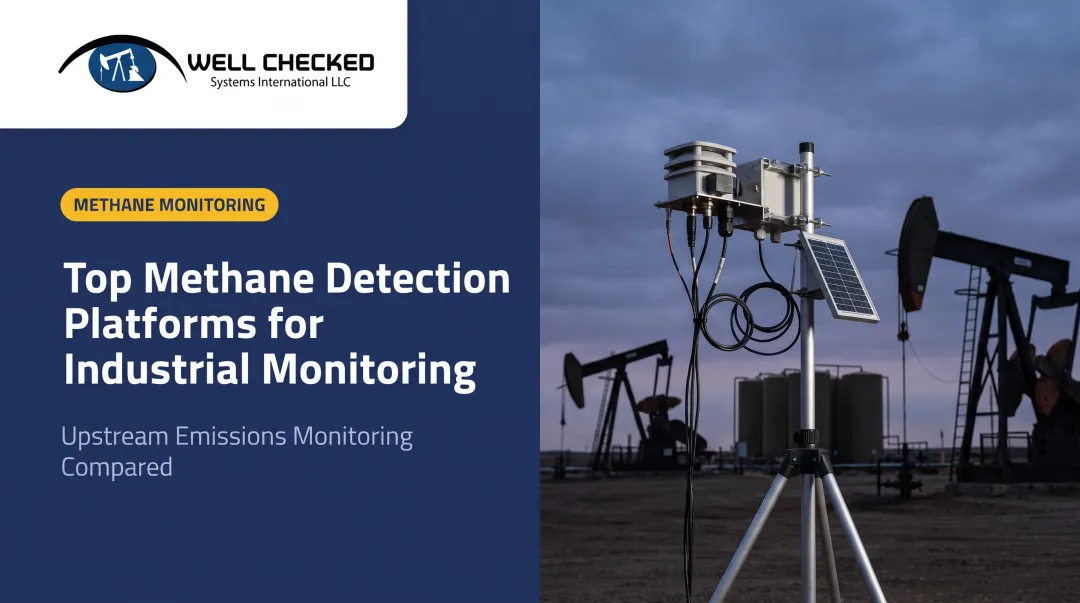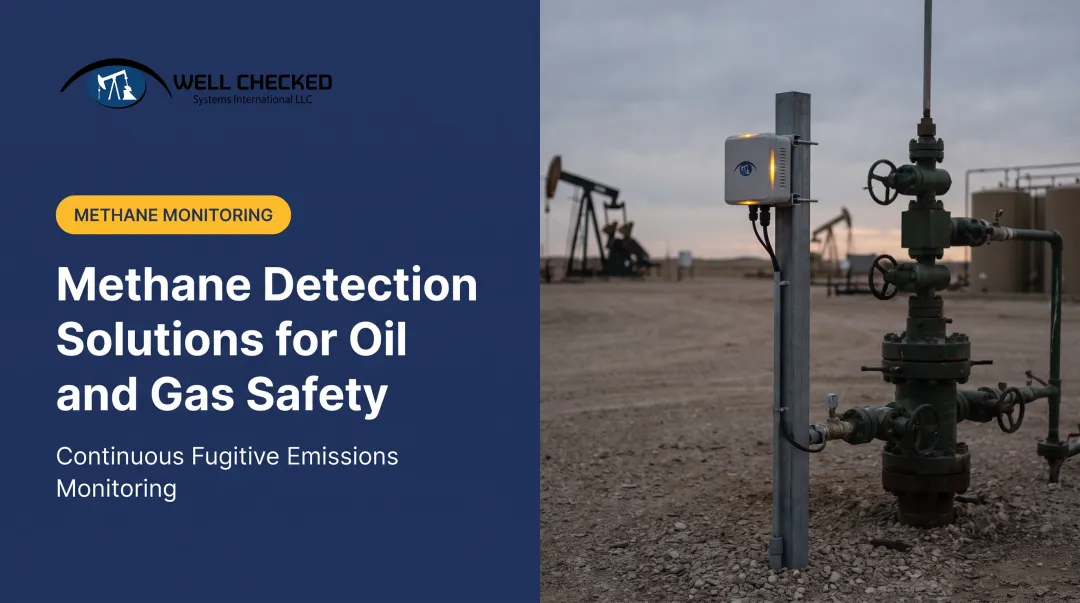

That's the backdrop for why detection technology stopped being a nice-to-have. Effective monitoring now drives three things operators can't ignore: regulatory compliance, cost control, and field safety.
The pressure is coming from two directions at once. EPA's 40 CFR Part 60 Subpart OOOOb rule sets specific fugitive-monitoring schedules and repair timelines for new and modified sources. Meanwhile, OGMP 2.0 is pushing operators toward measurement-based reporting, not estimates. Together, they've made this the year operators are actually evaluating detection vendors, not just reading about them.
Key Takeaways
- IR, laser (TDL), acoustic, and catalytic sensors power portable, fixed, and autonomous multi-sensor platforms
- Continuous AI-driven monitoring is replacing periodic LDAR inspections for better regulatory defensibility
- Choose on detection accuracy, false-alarm filtering, and quantification—not price alone
- Continuous multi-sensor records beat quarterly LDAR snapshots for EPA- and ESG-ready reporting
Overview of Methane Detection in the Oil & Gas Industry
Methane detection technology covers instruments and systems that identify, locate, and quantify fugitive methane and VOC emissions across wellsites, compressor stations, and gathering infrastructure. For US upstream operators under rising compliance and LDAR pressure, options range from a handheld sniffer to a fully autonomous, AI-managed sensor network.
The category is growing fast. The global methane-emissions-monitoring-in-oil-and-gas market was valued at $3.40 billion in 2025 and is projected to reach $16.79 billion by 2033, according to published market research. US onshore regulatory pressure from EPA Subpart OOOOb is a major driver of that growth, even though the market figure is global.
Below is a ranked breakdown of the top methane detection solutions available to US upstream operators, from single-sensor tools to full autonomous platforms.
Top Methane Detection Solutions for Effective Monitoring
This roundup evaluates sensing technology, accuracy and selectivity, regulatory defensibility, autonomous capability, and real-world deployment track record. Options range from autonomous multi-sensor platforms to portable survey tools and OEM sensor modules.
Well Checked Systems (Zensory.ai™)
Well Checked Systems is an Oklahoma-based autonomous wellsite intelligence company with 13+ years of experience. Its Zensory.ai™ platform currently monitors remote sites, including a confirmed program with a large Appalachian operator in the Appalachian Basin.
What sets it apart is the sensor combination. Zensory.ai™ pairs three inputs into one system:
- Sight: high-resolution video with AI object detection
- Sound: acoustic AI that flags abnormal equipment noise
- Gas imaging: Long-Wave Infrared Optical Gas Imaging (LWIR OGI) for day/night methane and VOC detection
These feed into a three-tier architecture:
- Zentinal Ops™: visual and acoustic intelligence
- Zentinal Core™: fuses sensor streams and filters false alarms
- Zentinal IQ™: quantifies validated events for regulatory-defensible reporting
Each site goes through roughly 2 days of AI Site Learning to establish a normal operating baseline, which helps the system tell routine flaring or venting apart from an actual leak. The company reports continuous multi-sensor processing at production scale.
| Factor | Details |
|---|---|
| Technology | Multi-sensor AI (video, acoustic, LWIR OGI); ~2-day AI Site Learning per site |
| Regulatory Fit | Structured for EPA Subpart OOOOb, OGMP 2.0 Level 4/5, SASB, TCFD |
| Best For | Mid-sized to large operators looking to replace expensive route-based operator visits with autonomous, defensible monitoring |

Drone-Based Measurement Services
Drone-based providers offer UAV-assisted methane measurement with both top-down and bottom-up quantification, typically backed by ISO/IEC 17025-accredited testing laboratories. These services combine a drone-mounted sensor unit with cloud-based weather-adjusted modeling to map leaks across an entire site.
| Factor | Details |
|---|---|
| Technology | Drone-mounted sniffers and optical gas imaging |
| Regulatory Fit | Aligns with OGMP 2.0 Level 5 site-level reporting |
| Best For | Periodic large-area emissions mapping and maintenance prioritization |
Established Detector Manufacturers
Established manufacturers bring decades of experience building fixed and stationary methane detectors. Their catalogs span laser-based, infrared, and multi-gas analyzers.
The strength of this category is breadth: hardware is made for oil and gas, landfill, and utility markets alike, so operators can pick a device suited to a specific use case rather than a one-size-fits-all system.
| Factor | Details |
|---|---|
| Technology | TDL laser spectroscopy, NDIR, catalytic sensors |
| Regulatory Fit | Supports LDAR surveys and emissions baselining |
| Best For | Operators needing point-in-time survey equipment |
OEM Sensor Module Suppliers
Component suppliers produce sensor modules rather than a turnkey monitoring service. Product lines typically include NDIR, laser (TDLAS), catalytic, and semiconductor methane sensors, sold for OEM integration into custom devices.
This category fits hardware builders, not operators looking for a ready-made compliance solution.
| Factor | Details |
|---|---|
| Technology | NDIR, TDLAS, catalytic, semiconductor sensor modules |
| Regulatory Fit | General industrial/residential gas safety standards |
| Best For | Device manufacturers building custom detection hardware |
Operator-Built Internal Programs
Some major integrated operators build their own internal monitoring ecosystems rather than buying one off the shelf, installing sensors at scale across operated upstream assets and feeding data into a centralized hub.
These systems typically combine IoT sensors, infrared cameras, pyrometers, and internal response tooling, benchmarked against drone-based detection.
| Factor | Details |
|---|---|
| Technology | IoT sensors, OGI cameras, pyrometers, PEMS, satellite/drone integration |
| Regulatory Fit | Internal methane target tracking and corporate reporting |
| Best For | Major integrated operators building proprietary enterprise-wide programs |

How We Chose the Best Methane Detection Solutions
The most common mistake operators make: picking a detection tool on price alone, without checking false-alarm rates or whether the data will actually hold up in a regulatory submission.
A controlled test of 11 continuous-monitoring solutions at Colorado State's METEC facility found false-positive rates ranging from 0% to 79%, with quantification errors as extreme as -97% to +2,077% on small releases, per a peer-reviewed METEC study. That gap between marketing claims and field performance is why the criteria below focus on accuracy, defensibility, and real deployments—not brochure specs.

We evaluated each solution on:
- Sensing technology accuracy: sensor type suited to continuous fugitive detection, not only spot-checks
- Autonomous vs. periodic monitoring: real-time coverage versus snapshot surveys
- Quantification and reporting: output that feeds directly into EPA or OGMP submissions
- Deployment track record: multi-year operation at field scale
- Total cost of ownership: cost measured against route-based inspection spend, not sticker price
Conclusion
Choose a methane detection partner on operational fit, regulatory defensibility, and scale. Before you sign, press vendors on proof—not pitch decks.
Ask for:
- False-alarm rates under real operating conditions
- Blind-test or third-party validation results
- Evidence the system has scaled past a single pilot site
Well Checked Systems built Zensory.ai™ for that bar. The platform is live on a documented Appalachian Basin monitoring, with a workflow that helps operators acknowledge, dispatch, and mitigate validated events within 24 hours.
Operators who want autonomous, defensible methane monitoring can start with a fixed-fee pilot and run the platform on their own sites before a broader rollout.
Frequently Asked Questions
What device can detect methane?
Options range from portable catalytic and IR sensors to handheld multi-gas detectors and stationary NDIR/TDL analyzers. Autonomous multi-sensor AI platforms like Zensory.ai™ combine several methods into one continuous system.
How much does methane detection equipment typically cost?
Handheld sensors start at a few hundred dollars; enterprise continuous monitoring is contract-priced. Autonomous platforms are typically benchmarked against route-based site visits, which can cost larger operators millions annually.
What is the difference between continuous and periodic methane monitoring?
Periodic monitoring, like LDAR surveys or drone flights, captures a snapshot in time. Continuous monitoring provides real-time data, giving operators faster response times and more defensible compliance records.
Is methane detection required by law for US oil & gas operators?
Yes, for many sites. EPA's 40 CFR Part 60 Subpart OOOOb requires fugitive-emissions monitoring and reporting, with alternative-monitoring pathways available for advanced technologies that meet performance thresholds.
How accurate are AI-based methane detection systems?
AI multi-sensor systems learn a site's normal baseline over a couple of days, then compare new signals against it. That cuts false alarms versus single-sensor threshold alarms that flag every reading above a fixed level.
What is OGMP 2.0 and why does it matter for methane monitoring?
OGMP 2.0 is the leading voluntary methane reporting framework, run through UNEP's Oil and Gas Methane Partnership. Level 4 and 5 reporting require source- and site-level measurement data—not estimates—so operators need measurement-based technology.