
Quarterly leak detection and repair (LDAR) inspections and manual pumper routes worked when regulations were looser and budgets were flexible. Neither assumption holds anymore. Many operators struggle with the cost of route-based site visits alone, before factoring in fines from missed leaks or the labor needed to keep up with expanding monitoring rules.
This article breaks down the trends reshaping pipeline leak detection in 2026, what's driving them, how they're changing daily operations, and what to watch next.
Key Takeaways
- AI-driven multi-sensor monitoring (sight, sound, gas imaging) is replacing single-method detection systems
- Continuous, real-time monitoring is displacing costly periodic LDAR inspections and pumper routes
- Regulatory frameworks like EPA's methane rule and OGMP 2.0 demand measurement-based, defensible data
- Fiber-optic and satellite technologies are scaling detection across long-haul transmission networks
- Early adopters are cutting costs and reducing safety risk while building audit-ready compliance records
Top Pipeline Leak Detection Trends Shaping 2026
Leak detection is shifting away from manual, periodic inspection and toward continuous, AI-driven, multi-modal systems. Operators facing 2026 compliance deadlines don't have the luxury of waiting for technology to mature slowly. Here's what's actually changing on the ground.
AI-Powered Multi-Sensor Autonomous Monitoring
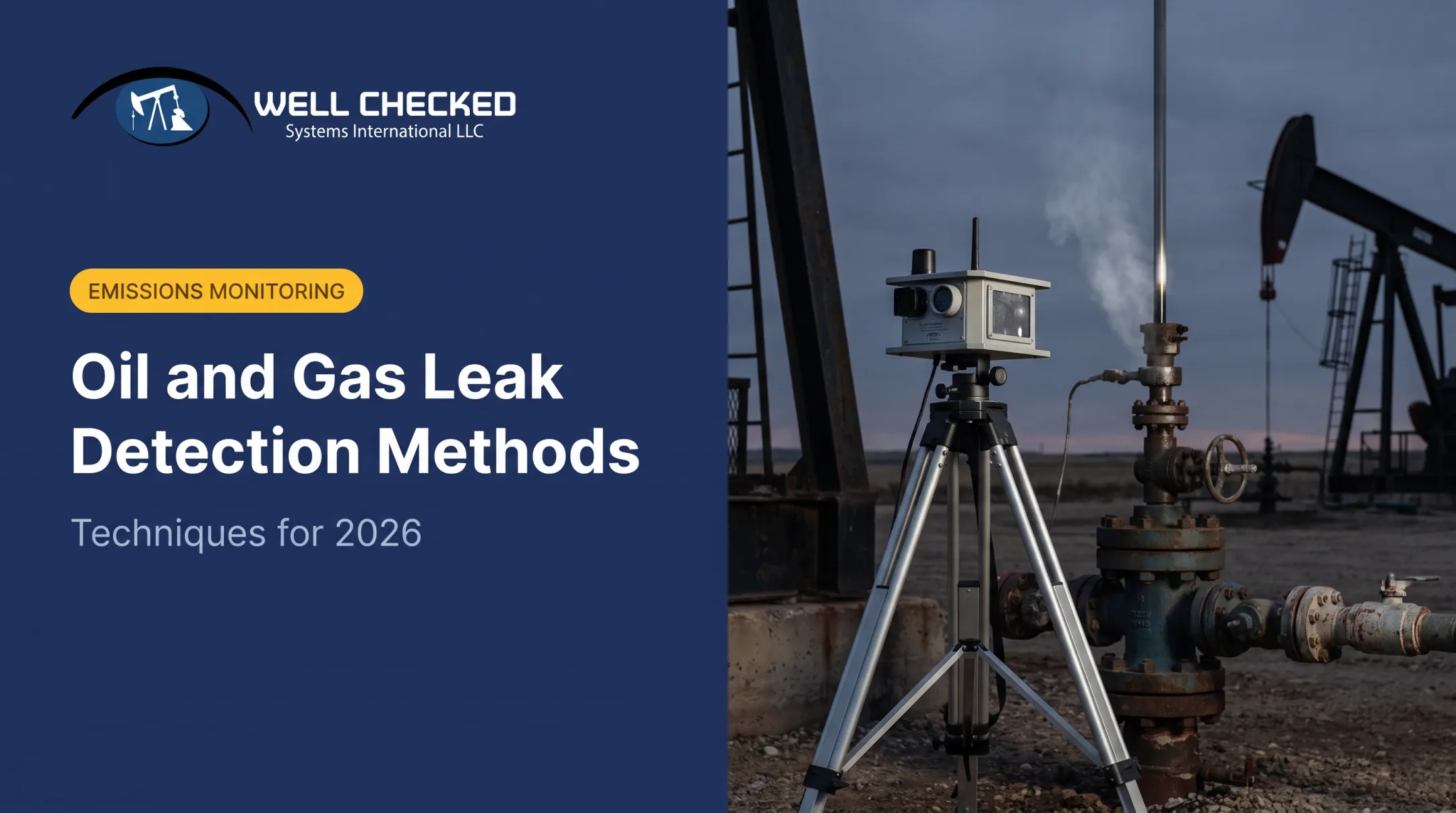
Single-sensor systems are giving way to platforms that fuse multiple detection modes into one autonomous stack. Instead of relying on optical gas imaging alone, or acoustic abnormal-sound detection alone, modern systems combine both, plus visual analytics, so the platform can cross-check signals before flagging an alert.
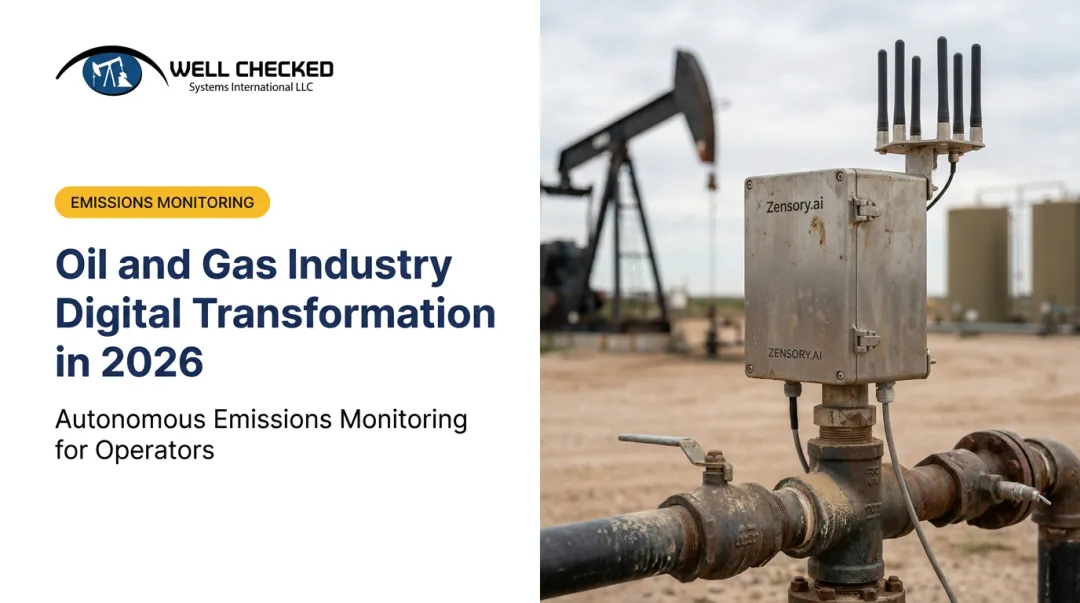
Well Checked's Zensory.ai™ platform illustrates this shift. Its Zentinal Core™ detection layer combines high-resolution video, Long-Wave Infrared optical gas imaging, and acoustic anomaly AI across more than 200 monitored sites. The system spends roughly two days learning a site's normal operational baseline, then alerts only when something breaks that pattern.
Why this matters: requiring corroboration across sensor types cuts down false positives dramatically. A genuine fugitive emission tends to show up across more than one signal type; routine process noise usually doesn't. That distinction is the difference between an alert queue operators actually trust and one they learn to ignore.

Continuous, Real-Time Monitoring Complementing Periodic LDAR
Quarterly optical gas imaging (OGI) surveys and manual pumper routes capture a snapshot. They tell you what a site looked like on the day someone drove out there, not what happened in the three months between visits.
EPA's advanced-technology monitoring framework sets a meaningfully different bar. Continuous systems must:
- Produce a valid methane emission rate at least once every 12-hour block
- Maintain less than 10% downtime
- Detect emissions at thresholds as low as 0.40 kg/hour
That's a fundamentally different opportunity to catch a leak compared to a survey conducted four times a year.
Continuous monitoring doesn't just detect leaks faster. It captures how long an event ran and how much gas was lost, data that periodic snapshots simply can't reconstruct after the fact.
Satellite and Aerial Methane Detection at Scale
Ground-based sensors handle site-level detail. Satellite and aerial programs handle scale, especially for large "super-emitter" events that ground sensors might not catch if they're concentrated outside monitored footprints.
UNEP's Methane Alert and Response System identified and notified stakeholders about more than 1,200 major methane plumes in 2024 alone, its first full year of operation. That's wide-area screening working at a scale no ground crew could replicate.
The catch: satellite detection identifies where a plume exists, not necessarily its exact source or cause. Operators still need a fast ground-response workflow to investigate and confirm before regulatory clocks start ticking.
Distributed Fiber-Optic Sensing (DAS/DTS) for Long-Haul Pipelines
Distributed Acoustic Sensing and Distributed Temperature Sensing run fiber-optic cable directly along a pipeline's length, detecting vibration and temperature anomalies over hundreds of miles in near real time.
This approach shines on long-haul transmission infrastructure, where a single cable run can cover distances that would otherwise require dozens of point sensors. NETL-backed research has targeted real-time distributed fiber sensing over ranges up to 150 kilometers.
The trade-off is cost. Retrofitting existing pipelines with fiber is expensive, which is why adoption concentrates heavily in new-build long-haul transmission projects, where fiber can be installed alongside the pipe during initial construction rather than trenched in afterward.
Regulatory-Driven Emissions Quantification and Reporting
Detection alone isn't enough anymore. EPA's Subpart OOOOb rule, OGMP 2.0's Level 4 and 5 frameworks, and SASB/TCFD disclosure expectations are pushing operators to pair every detected event with defensible quantification, not just an alert.
This is why tiered architectures are gaining traction. Well Checked's model separates these functions:
| Layer | Function |
|---|---|
| Zentinal Ops™ | Visual and acoustic equipment intelligence: high-resolution video, object recognition, acoustic anomaly detection, and actionable alerts |
| Zentinal Core™ | Detects emissions, filters false alarms, validates true anomalies; supports OGMP 2.0 Level 3 |
| Zentinal IQ™ | Quantifies validated events by volume, duration, and rate for regulatory submission |
Because Zentinal IQ™ only quantifies events that Core has already validated, operators avoid the common failure mode of generating regulatory data from noise. That sequencing lets operators phase in reporting capability as compliance demands escalate, rather than buying full quantification infrastructure before they need it.
What's Driving These Pipeline Leak Detection Trends
Regulation, cost, and technology maturity are converging, each accelerating the other two.
Technology Advances
Sensor and processing costs have fallen sharply while accuracy has climbed. Long-Wave Infrared cameras, for instance, now deliver day/night methane and volatile organic compound (VOC) detection at roughly one-third the cost of traditional mid-wave infrared systems, according to Well Checked's own deployment data. That price shift alone changes the math for operators considering coverage across hundreds of remote sites. Well Checked has a USPTO provisional patent filing for Detecting and Quantifying Fugitive Methane and Vapor Emissions Using Infrared Imaging and Machine Learning.
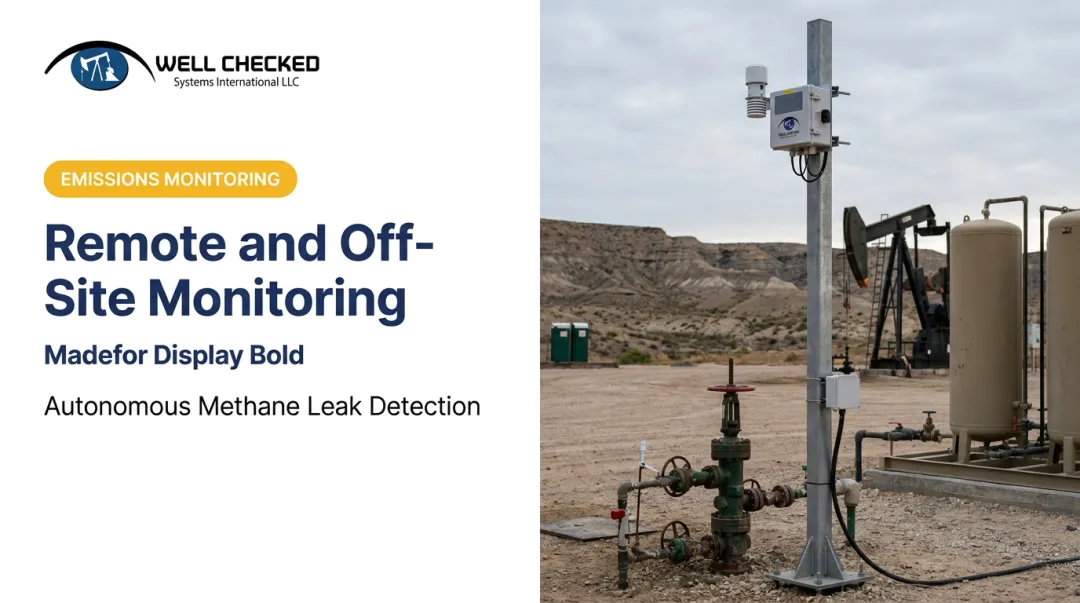
Edge computing has closed a separate gap: onsite processing means detection systems keep working even at remote wellsites with limited or no continuous network connectivity, syncing data once connections are available.
Regulatory and Compliance Pressure
EPA's 40 CFR Part 60 Subpart OOOOb requirements are mandating alternative-monitoring compliance for a widening set of operators. EPA has also noted that compliance dates keep moving, and operators need to verify current deadlines rather than assume one sector-wide date applies.
- OOOOb covers new, modified, and reconstructed sources built after December 6, 2022
Cost Pressures and Efficiency Needs
Route-based pumper visits are expensive at scale. Mid-sized to large operators typically spend $1 million to $5 million or more annually on route-based site visits, according to Well Checked's internal data. That expense persists whether or not a site actually has a problem that day.
EPA's own regulatory cost modeling assumes roughly 2.4 hours per OGI survey at a $142 hourly contractor rate, a baseline that adds up fast across a large multi-site portfolio conducting quarterly inspections.

Competitive and ESG Dynamics
Investors increasingly weigh emissions performance into capital decisions. The IEA estimates that oil and gas methane abatement consistent with a 75% reduction target would require approximately $22 billion annually through 2035, framed as less than 2% of annual industry net income. That figure signals methane performance is now a material capital-planning line item, not a side issue for the sustainability team.
How These Trends Are Impacting the Oil & Gas Industry
The move to AI-driven, continuous detection is reshaping field operations, budgeting, and workforce roles across the sector.
Operational Impact
Operators are shifting from scheduled pumper routes to operate-by-exception models. Instead of visiting every site on a fixed calendar, field teams respond only when a validated event triggers an alert.
A common protocol structures that response in three steps, completed within a 24-hour window to support a documented, timely response on validated methane events:
- Acknowledge the alert and confirm it reflects a true fugitive emission
- Dispatch a technician to the flagged site
- Mitigate the leak and document the repair for compliance records
Business Impact
Capital and operating budgets increasingly favor continuous monitoring platforms over expanding inspection fleets. With defensible duration and volume data on every validated event, operators can make sound repair-versus-defer decisions instead of guessing.
That same 24-hour response window doubles as a financial lever. Fast detection turns into a measurable cost-avoidance line item, not just a safety benefit.
Workforce Impact
Field roles are changing shape. Teams once focused on routine driving and inspection now shift toward exception-response and data-interpretation work:
- Reading AI-flagged alerts to confirm validated events
- Running dispatch playbooks for confirmed leaks
- Validating events instead of patrolling routes on a fixed schedule
This shift also cuts unnecessary exposure to traffic, weather, and hazardous site conditions tied to unproductive travel.
Future Signals: What to Watch Beyond 2026
Detection technology won't stop evolving once 2026 compliance deadlines pass. A few developments worth tracking:
- Expanding alternative-monitoring pathways: More state SIPs/FIPs are likely to recognize continuous monitoring as a substitute for manual LDAR, widening where operators can legally complement quarterly inspections.
- Unified basin-wide dashboards: Satellite, aerial, and ground-sensor data are converging into single views, giving operators company-wide visibility instead of fragmented, source-by-source reporting.
- Tiered detection-to-quantification as the default: Procurement is trending toward architectures that separate detection from quantification, the same approach behind Well Checked Systems' Zentinal Core™ and Zentinal IQ™ platform, letting operators scale compliance capability as demands grow rather than over-buying upfront.
Conclusion
2026's pipeline leak detection landscape hinges on three shifts: AI-driven multi-sensor monitoring over single-method systems, continuous data over periodic snapshots, and regulatory-defensible quantification over basic alerting.
Operators adopting these approaches now are cutting costs and reducing safety risk, closing compliance gaps ahead of competitors still running quarterly inspections and manual routes.
A scalable, multi-sensor platform does more than satisfy this year's rule; it builds resilience for whatever compliance demands come next. Well Checked Systems' Zensory.ai™ platform, pairing continuous detection with regulatory-defensible quantification, shows what that resilience looks like in practice.
Frequently Asked Questions
How much does it cost to have a leak detected?
Cost varies by method: pressure testing is cheapest, while fiber-optic and satellite systems cost the most to install. Continuous monitoring costs more upfront but typically delivers stronger ROI through reduced downtime and fewer site visits.
What are the three types of leak detection?
Detection methods fall into three categories: internally-based (pressure and flow monitoring), externally-based (acoustic, fiber-optic, infrared, vapor-sensing), and visual/AI-based (optical gas imaging and computer vision). Most modern platforms combine more than one type.
What is the EPA methane rule and how does it affect leak detection in 2026?
The EPA methane rule, codified at 40 CFR Part 60 Subpart OOOOb, sets emissions standards for new and modified sources. It also creates alternative-monitoring pathways that push operators toward continuous, technology-based detection over manual inspection alone.
How does AI improve the accuracy of pipeline and wellsite leak detection?
AI models learn a site's normal operational baseline within about two days, allowing them to separate genuine fugitive emissions from routine process noise. This cuts false alarms and lets teams trust the alerts they receive.
What's the difference between continuous monitoring and traditional LDAR inspections?
Continuous monitoring captures leak duration and volume in near real time using always-on sensors. Traditional LDAR relies on quarterly point-in-time surveys, meaning any leak occurring between inspections can go undetected for months.
How quickly should operators respond once a leak is detected?
Best practice follows an acknowledge-dispatch-mitigate protocol, responding within 24 hours of a validated event. This response window is specifically designed to support a documented, timely response tied to confirmed methane events.