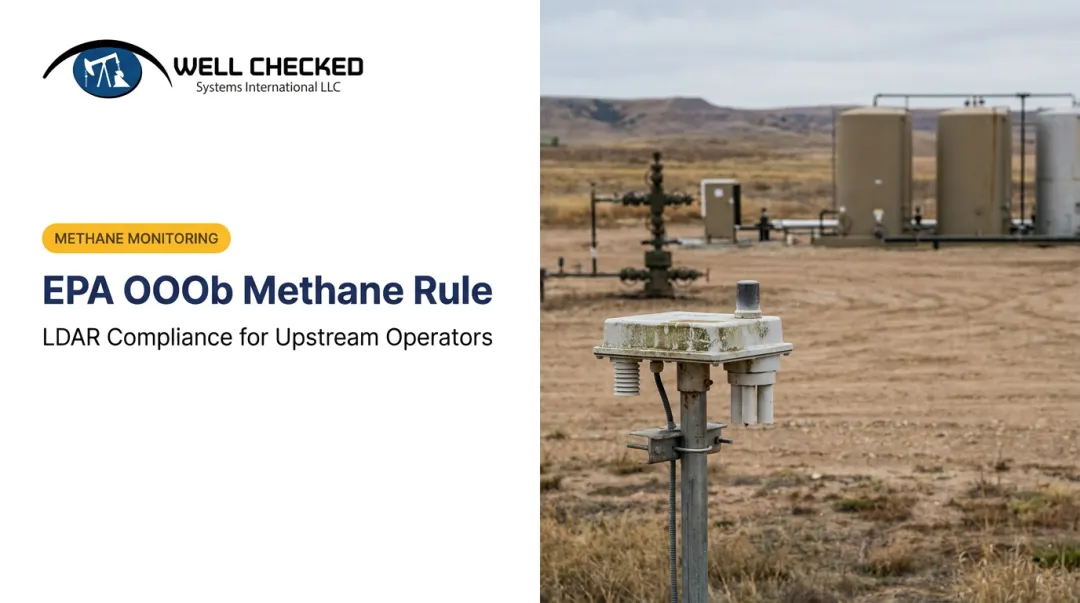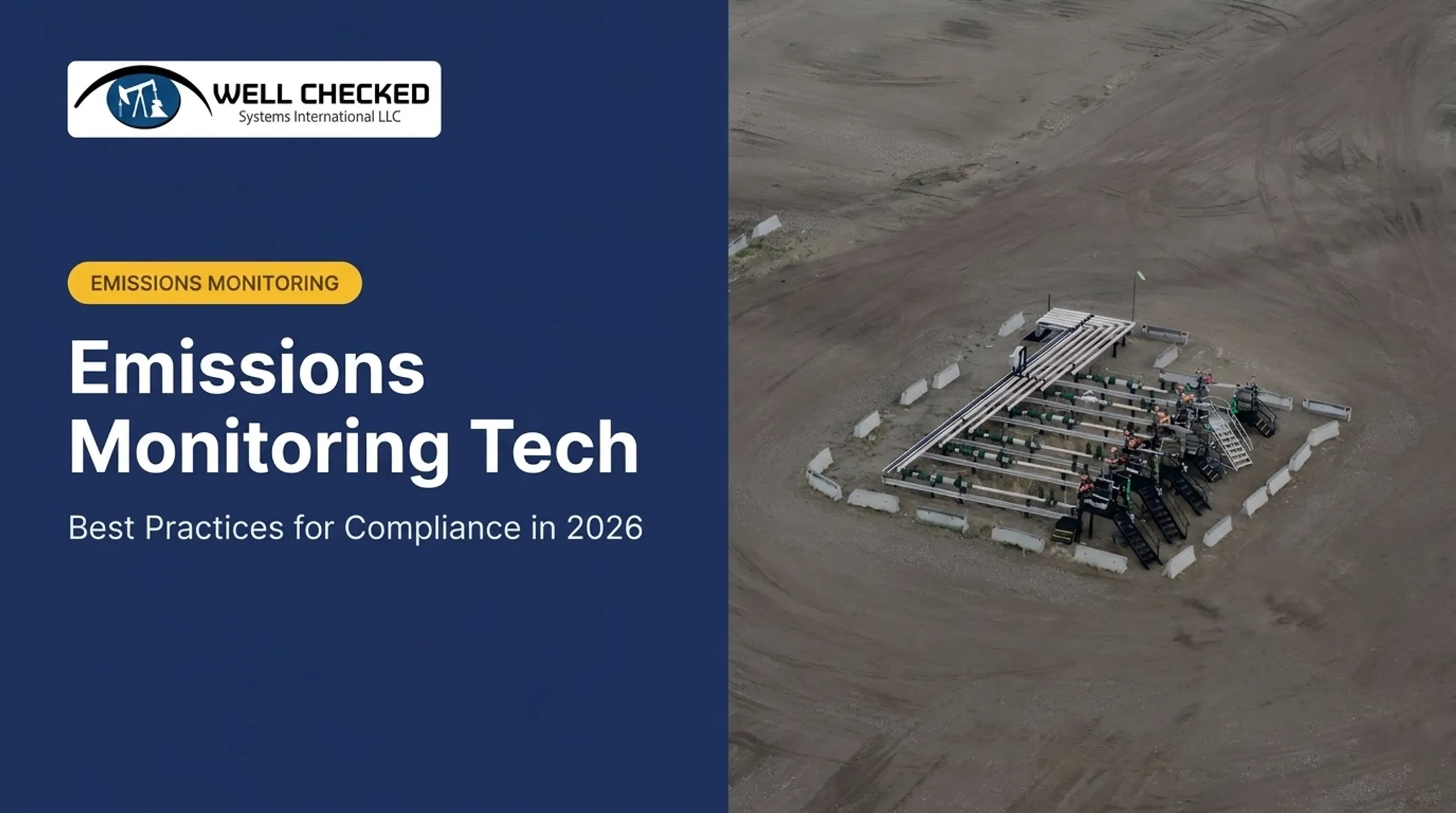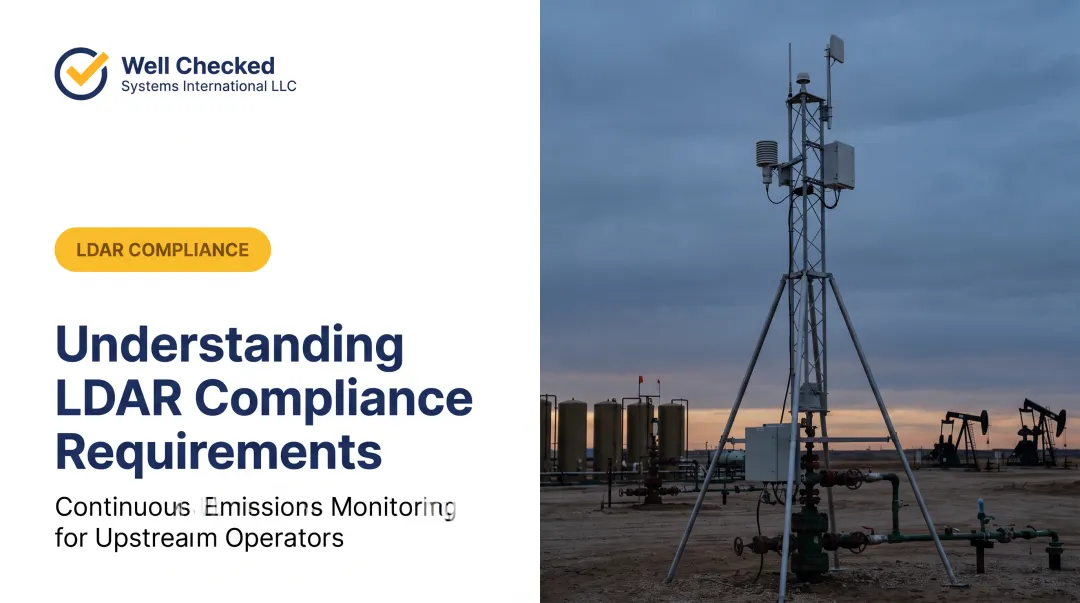

Between EPA's 2026 decision not to update NESHAP standards, the rescission of the GHG Endangerment Finding, and a running series of OOOOb technical amendments, upstream operators face a moving target. Meanwhile, investor-driven frameworks like OGMP 2.0, SASB, and TCFD keep raising the bar regardless of what happens in Washington.
Here's the problem: even as federal enforcement direction shifts, operators still need defensible emissions data. State regulators want it. Investors want it. And if EPA changes course again, you don't want to have built your compliance program on quicksand.
This guide breaks down where EPA standards stand today, what monitoring and reporting operators must actually do, and how to build a compliance program that survives political whiplash.
Key Takeaways
- 40 CFR Part 60 Subpart OOOOb remains the primary federal methane rule, with alternative-monitoring pathways for qualifying operators
- EPA's 2026 NESHAP "no update" and Endangerment Finding rescission add uncertainty—state and investor requirements still apply
- Continuous multi-sensor monitoring is the most defensible path for alternative compliance and ESG data demands
- Operators without accurate emissions data risk fines, litigation, and investor pullback
Understanding the EPA's Oil and Gas Emissions Regulatory Framework
Oil and gas emissions rules sit in a few overlapping EPA programs. Knowing which subpart applies—and what still stands after recent actions—keeps compliance planning grounded.
NESHAP: Old Rule, New Fight
EPA's original NESHAP standards, finalized in 2012, target hazardous air pollutants like benzene from production, transmission, and storage facilities.
That rulemaking projected roughly 190,000 tons of VOC, 1 million tons of methane, and 11,000 tons of HAP reduced through associated standards (Federal Register, 2012). Those are the agency's original projections, not measured results.
Litigation kept the pressure on. Environmental groups sued EPA in 2022 over delayed periodic review, leading to a 2023 proposed consent decree. In April 2026, EPA proposed not to revise the major-source oil-and-gas NESHAP standards, citing no cost-effective new control technology since the last review.
OOOOb: The Methane Rule That Matters Most
Subpart OOOOb, finalized under EPA's Methane Rule, sets methane and VOC limits for new, modified, and reconstructed sources. Rollout has been uneven:
- July 2025: Interim final rule extended implementation deadlines across control devices, equipment leaks, storage, super-emitter response, and flares
- June 2026: Targeted technical amendments took effect, addressing compliance mechanics without touching the underlying BSER analysis

The Endangerment Finding Rescission
EPA finalized rescission of the 2009 GHG Endangerment Finding in February 2026. The action targets on-highway vehicle GHG standards specifically.
EPA states it does not affect traditional air-pollutant regulation, so OOOOb and NESHAP remain in force. The rule has already drawn a legal challenge in the D.C. Circuit as of May 2026.
State rules, OGMP 2.0, SASB, and TCFD obligations remain untouched by the rescission.
Who These Regulations Apply To
OOOOb and NESHAP commonly cover:
- Gas wells and well sites
- Centrifugal and reciprocating compressors
- Pneumatic controllers
- Storage vessels
- Natural gas processing plants
- Gathering, boosting, and transmission compressor stations
Core Compliance Requirements: Monitoring, Reporting, and Recordkeeping
LDAR Frequency Isn't One-Size-Fits-All
OOOOb ties inspection frequency to site type and emissions threshold, not a flat quarterly rule:
- Single-wellhead-only sites: quarterly AVO screening (at minimum)
- Multi-wellhead sites: semiannual OGI or Method 21 after initial survey
- Larger well sites/centralized production facilities: quarterly OGI or Method 21
Table-based thresholds push frequency higher as detection thresholds tighten. At ≤1 kg/hr, quarterly monitoring is required; at higher thresholds, monthly or bimonthly cadences apply (eCFR, current text).

Alternative Monitoring: What Qualifies
EPA allows operators to substitute continuous or advanced monitoring for traditional walk-arounds, but the submission must document:
- Detection threshold and spatial resolution
- Supporting field data and SOPs
- QA/QC procedures and personnel qualifications
- Data handling, storage, and delivery methods
- Measurement frequency and continuous-data availability where applicable
Continuous monitoring platforms must cover each of these elements in the submission, not detection performance alone, to qualify as an approved alternative.
Recordkeeping and Super-Emitter Response Deadlines
Records (monitoring plans, survey dates, calibration logs, and results) must be retained onsite or at the nearest field office for at least five years. Annual reports go through CEDRI, typically due 90 days after the initial compliance period.
Those same records matter when incidents hit. For super-emitter events (100 kg/hr methane or more), operators face strict clocks after EPA notification: five days to investigate, then 15 days for formal reporting. Many operators now run an acknowledge-dispatch-mitigate workflow against those deadlines: validate the event, send a response team, and finish mitigation inside a defined window to limit fine exposure.
A 2024 EPA enforcement action against an oil and gas operator resulted in a $5.5 million penalty and mandated facility upgrades for Clean Air Act violations (EPA enforcement action, 2024). Gaps in monitoring records and response documentation were part of what drove that outcome.

Beyond Federal Rules: State, OGMP 2.0, SASB, and TCFD Reporting Pressures
Federal rollback risk doesn't erase state and investor obligations. Operators juggling multiple jurisdictions face overlapping, sometimes conflicting, requirements.
State examples:
- Colorado: Regulation 7 sets methane and VOC standards stricter than federal baseline, with continuing updates through 2026
- Pennsylvania: 25 Pa. Code §§129.121–129.130 mandate AVO/LDAR schedules, repair deadlines, and annual reporting for unconventional sources
- New Mexico: 20.2.50 NMAC and 19.15.27 NMAC require weekly or monthly AVO inspections and a 98% statewide gas-capture target by December 31, 2026
Investor-driven frameworks add another layer:
- OGMP 2.0 Level 4/5 requires measurement-based, source-level reporting reconciled with site-level data, well beyond EPA minimums; Gold Standard members must hit this for operated assets within three years
- SASB Oil & Gas E&P demands granular Scope 1 breakdowns: flaring, combustion, process, vented, and fugitive emissions
- TCFD, though formally disbanded in 2023, still shapes how publicly traded E&Ps disclose climate risk through governance and scenario-planning metrics
None of these frameworks care whether federal enforcement tightens or loosens. They want consistent, defensible numbers.
How Continuous Monitoring Technology Meets These Standards
Quarterly LDAR inspections leave gaps. A leak that starts the day after an inspection can run undetected for months. Alternative-monitoring provisions are designed to close that exposure window, provided operators can document equivalency.
This is the gap Zensory.ai™, Well Checked Systems' multi-sensor platform, was built to close. It combines high-resolution video, Long-Wave Infrared optical gas imaging, and acoustic sensing into one continuous monitoring stack.
Three Tiers, One Compliance Chain
- Zentinal Ops™ delivers 360° visual and acoustic intelligence, processing 1,500+ videos per site per day
- Zentinal Core™ filters false alarms using a site-specific baseline built during a roughly two-day AI Site Learning cycle, alerting only on validated fugitive anomalies
- Zentinal IQ™ quantifies Core-validated events by volume, duration, and rate, producing EPA-format compliance logs for OGMP 2.0 Level 4/5, SASB, and TCFD reporting

That structure matters because OOOOb's alternative-monitoring pathway requires exactly this kind of evidentiary chain: detection, validation, then quantification. Operators need defensible records, not raw sensor noise.
Onsite edge computing keeps the system running independently of connectivity, which matters at remote wellsites where cell signal is inconsistent at best. Data syncs automatically once communications return.
The same Core-validated event data feeds the acknowledge-dispatch-mitigate workflow discussed earlier. Alerts hit the dashboard, email, SMS, and SCADA integration in near-real time, so operators can hit the 24-hour response window that helps limit fine exposure on validated methane events.
Practical Steps for Operators to Stay Ahead of Regulatory Change
Three moves help operators stay ready as EPA methane rules and investor reporting expectations keep shifting:
- Run a gap analysis. Compare current LDAR practices against OOOOb's alternative-monitoring documentation requirements: detection threshold, spatial resolution, QA/QC, and data retention.
- Unify your data structure. Build one reporting pipeline that satisfies EPA, state agencies, and investor frameworks (OGMP 2.0, SASB, TCFD) at once, instead of running a separate system for each audience.
- Evaluate vendors on defensibility, not just detection. Ask about false-alarm filtering accuracy, edge-computing reliability, and whether the output format matches what regulators and investors actually require.
Operators who treat compliance data as a single asset — rather than a patchwork of quarterly reports and spreadsheets — weather the next round of EPA rule changes without scrambling.
Frequently Asked Questions
What is the EPA methane rule for oil and gas?
The EPA methane rule package centers on 40 CFR Part 60 Subpart OOOOb (new, modified, and reconstructed sources), which sets methane and VOC limits for crude oil and natural gas facilities such as wells, compressors, and storage vessels.
Did the EPA update oil and gas pollution standards in 2026?
EPA proposed not to strengthen NESHAP standards in April 2026, citing no cost-effective new control technology identified since the last review. This is currently a proposal, not a final decision.
What is OGMP 2.0 and how does it relate to EPA compliance?
OGMP 2.0 is a voluntary, investor-driven measurement framework requiring source-level and site-level reconciled reporting (Level 4/5). It exceeds EPA minimums and is used to satisfy ESG disclosure expectations, not federal compliance itself.
How often must operators conduct LDAR inspections?
Frequency varies by site type and threshold under OOOOb, ranging from quarterly to semiannual for standard inspections. Approved alternative-monitoring technology can adjust or replace fixed inspection cadences if properly documented.
What happens if an operator doesn't comply with EPA emissions standards?
Non-compliance can trigger significant fines, such as the $5.5 million penalty noted above, plus mandated facility upgrades, litigation exposure, and reputational or investor relations damage.
How does the GHG Endangerment Finding rescission affect oil and gas operators?
The rescission primarily targets on-highway vehicle GHG standards, not stationary sources like well sites. EPA states traditional air-pollutant rules remain unaffected, and state and investor-driven requirements are untouched.