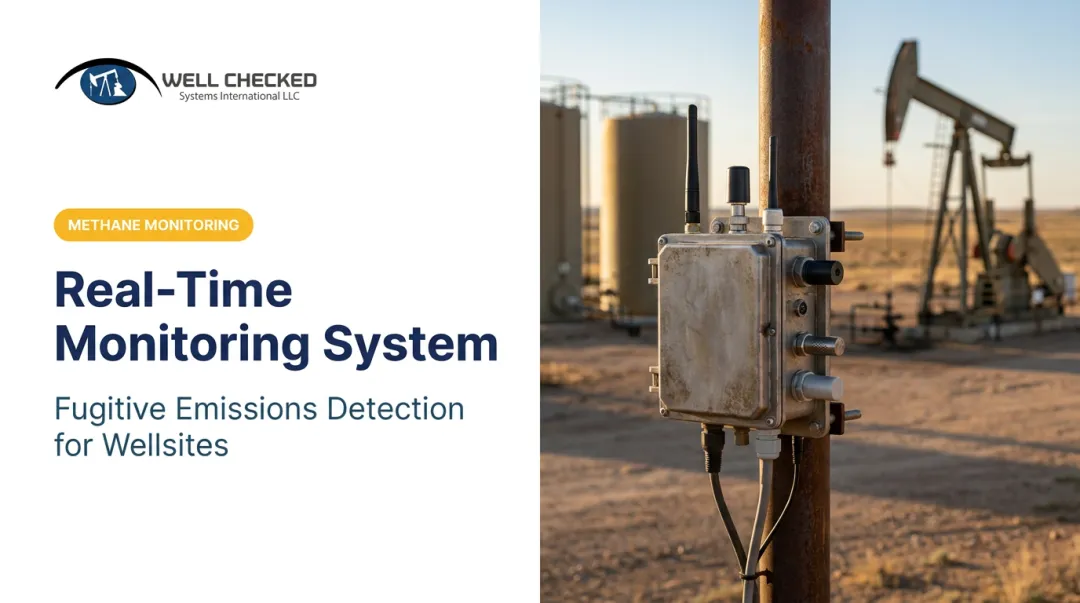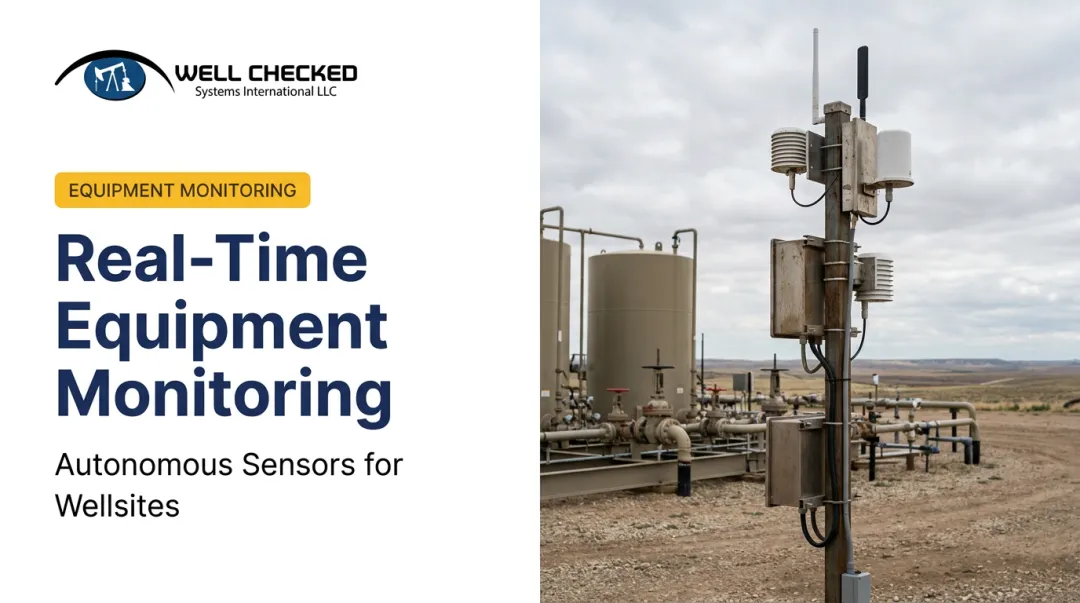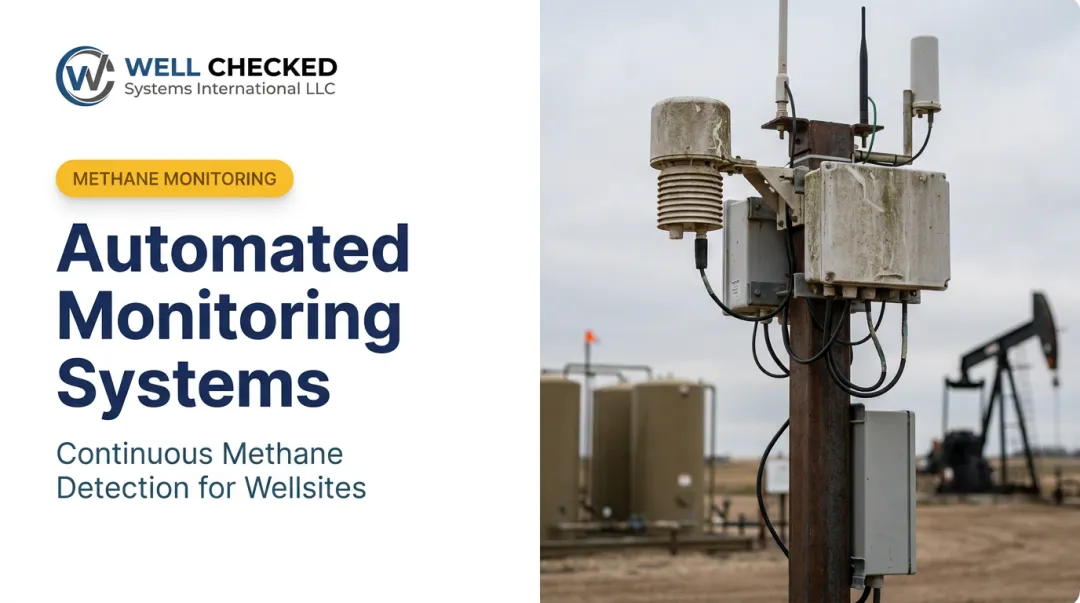

This is the exact gap industrial monitoring exists to close.
Across manufacturing, energy, utilities, and oil & gas, operators face the same math problem: more remote and distributed assets, tighter regulatory scrutiny, and fewer people available to physically check on any of it. Unplanned downtime costs industries an estimated $50 billion annually, according to Deloitte's analysis of predictive maintenance. This guide breaks down what industrial monitoring actually is, the main system types, the hardware and software behind them, and how the discipline is evolving fastest in high-consequence sectors like oil & gas emissions monitoring.
Key Takeaways
- Industrial monitoring shifts operations from reactive, manual inspection to continuous, data-driven visibility
- System types span condition/asset monitoring, environmental/emissions monitoring, process monitoring, and safety monitoring
- Sensors and cameras collect the data, but software that filters noise into real alerts creates the value
- Regulated sectors like upstream oil & gas need monitoring that produces regulatory-defensible, continuous compliance data
What Is Industrial Monitoring and What Is Its Purpose?
Industrial monitoring is the combined use of sensors, connectivity, and software platforms to continuously collect, transmit, and analyze data from equipment, processes, and environments. It replaces the old model of periodic, manual, on-site checks with something closer to a constant heartbeat on every asset that matters.
Three forces are driving adoption faster than most facilities can keep up with:
- Labor and skills shortages — fewer experienced technicians are available to walk routes and read gauges manually
- Rising safety expectations — companies face more pressure to keep people out of hazardous zones
- Tightening regulatory scrutiny — agencies increasingly expect continuous records, not quarterly snapshots
The stakes are real money. That $50 billion annual downtime figure from Deloitte represents lost production, emergency repairs, and missed shipments — the exact costs continuous monitoring is designed to prevent.
Core Objectives of Industrial Monitoring Systems
Regardless of industry, most monitoring programs are built around five recurring objectives:
- Equipment health and predictive maintenance — catching wear before it becomes failure
- Worker safety — keeping people out of hazardous conditions whenever possible
- Regulatory and environmental compliance — generating auditable records automatically
- Product quality — holding process variables inside acceptable ranges
- Cost and resource efficiency — cutting waste, fuel, and unnecessary labor hours

Here's the part that's easy to miss: the goal was never to collect more data. It's to filter that data so teams only act on genuine anomalies.
This is called operating by exception: instead of a person reviewing every gauge reading or camera feed, the system does that work and surfaces only what needs a human response. Without this filtering layer, more sensors just means more noise.
One common confusion: industrial monitoring isn't the same thing as "remote monitoring." Monitoring can be on-site and automated, centralized and remote, or some hybrid of both. The goal in every case is identical — continuous visibility without requiring someone to be physically present around the clock.
Main Types of Industrial Monitoring Systems
Industrial monitoring systems are usually categorized by what they measure, not by industry. Most facilities of any size run several of these categories simultaneously.
Condition & Asset Monitoring
This category tracks equipment health signals like vibration, temperature, current and voltage draw, and lubrication quality to catch deterioration before it becomes catastrophic failure. It's the backbone of predictive maintenance programs and typically the first monitoring layer any facility adopts.
Environmental & Emissions Monitoring
This category tracks air quality, gas concentrations, leaks, and emissions to protect the environment and satisfy regulatory reporting obligations. Methane rules and ESG disclosure pressure have made this one of the fastest-moving categories in industrial monitoring right now, particularly across upstream oil & gas, where continuous sensor networks are increasingly complementing quarterly manual inspections.
Process Monitoring
This category tracks operational parameters such as flow rate, pressure, tank levels, and chemical composition to keep product quality and process consistency within spec. It's the layer most closely tied to output and throughput.
Safety Monitoring
This category covers hazardous-zone presence detection, structural integrity checks, and leak or gas alarms. Unlike the other three types, this category exists to protect the people working around equipment and processes, not just the equipment or output itself.
Industrial Monitoring Devices and Software: The Technology Behind the Systems
Neither hardware nor software alone makes a monitoring system. The value shows up in how sensors, connectivity, and analytics work together.
Most Common Industrial Monitoring Devices
Operators typically deploy some combination of the following:
- Vibration sensors and accelerometers for rotating equipment health
- Temperature and pressure sensors for thermal and process conditions
- Flow meters for liquid and gas throughput
- Acoustic equipment sensors that flag abnormal sounds indicating mechanical issues
- AI-enabled cameras for visual inspection and object detection
- Optical gas imaging (OGI) cameras for gas and leak detection
The connectivity layer choice matters just as much as the sensor itself. Wired Ethernet, cellular, LoRaWAN, and edge computing each come with trade-offs.
For remote sites with unreliable connectivity, edge computing that keeps working without a live connection often makes or breaks a deployment. Well Checked's Zensory.ai platform, for example, runs its sensor analysis onsite, so monitoring continues even when a wellsite loses its connection.
Choosing Industrial Monitoring Software or a Platform
There's no single "best" software. The right platform depends on your priority: dashboarding and visualization, AI-driven anomaly detection versus static thresholds, or tight integration with existing SCADA and CMMS systems.
What separates mature platforms from basic dashboards:
- Machine-learning baselines that reduce false alarms instead of relying on fixed thresholds
- Open APIs and clear data ownership, so operators aren't locked into a single vendor's ecosystem
- Security architecture built for industrial environments, including network-independent edge devices
- Automated workflows that trigger alerts and actions rather than just displaying data on a screen
Industrial Monitoring in High-Stakes Environments: Oil & Gas Emissions Monitoring
Upstream oil & gas operators face a monitoring problem most generic platforms weren't built to handle: hundreds of remote, unmanned wellsites, genuinely hazardous field conditions, and direct exposure to the EPA's methane rule under 40 CFR Part 60 Subpart OOOOb, finalized in March 2024.
The cost problem is significant. Route-based pumper site visits (the traditional model of driving to every wellsite on a fixed schedule) can cost mid-sized to large operators $1 million to $5 million or more annually.
That figure covers:
- Labor and fuel for daily site-to-site travel
- Vehicle wear and maintenance across large fleets
- The opportunity cost of technicians driving instead of doing higher-value work
It's the single biggest reason operators are shifting toward autonomous, continuous monitoring instead of routine drive-bys.
A Multi-Sensor Approach to Detection
This is the environment Well Checked Systems built its Zensory.ai™ platform to solve. Rather than relying on a single sensor type, the platform fuses three inputs at each wellsite:
- High-resolution video with AI object detection
- Acoustic anomaly AI that flags abnormal equipment sounds
- Long-Wave Infrared Optical Gas Imaging that images methane and volatile organic compound (VOC) plumes invisible to the naked eye
Combining sight, sound, and gas lets the system tell the difference between routine venting from a separator and a genuine fugitive emission, rather than flagging every plume as a potential alarm. That distinction matters because most wellsites vent routinely as part of normal operations.
Scaling Across Multiple Basins
The platform is deployed across remote wellsites, including a confirmed multi-site program across the Appalachian Basin. At production scale, it analyzes more than 1,500 videos per site each day.
Each new site goes through roughly a two-day AI learning period, during which the system builds a site-specific baseline: normal stack emissions, routine equipment sounds, and typical thermal patterns that would otherwise trigger false alarms.
Once that baseline is set, the system only surfaces what falls outside it: the fugitive emission hiding among thousands of routine signals. This approach lets operators trust every alert as meaningful, not noise.
The Three-Tier Detection and Reporting Model
A three-tier architecture is emerging as the standard model in this space:
- Visual and acoustic equipment intelligence: Zentinal Ops™ handles this first, delivering high-resolution video, object recognition, acoustic anomaly detection, and actionable alerts.
- Detection and filtering: Zentinal Core™ handles this second, flagging validated events and screening out false alarms.
- Quantification and reporting: Zentinal IQ™ takes only the validated events and calculates volume, duration, and rate for regulatory-defensible reporting, formatted for frameworks like OGMP 2.0, SASB, and TCFD.
About 10% of emissions reported through OGMP 2.0 in 2025 used its most stringent Level 5 category, reflecting how much reporting rigor is now expected industry-wide. This layered approach lets operators start with detection and add compliance-grade quantification later, as regulatory pressure escalates.

Key Benefits and Common Challenges of Industrial Monitoring
Benefits worth building a business case around:
Operators evaluating monitoring investments tend to focus on three buckets:
- Downtime and cost avoidance: catching problems before they become expensive failures
- Improved worker safety: fewer hazardous site visits and less exposure to traffic, weather, and field conditions
- Regulatory and audit defensibility: continuous data logs instead of periodic snapshots that leave gaps, the kind of record regulators expect under frameworks like EPA Subpart OOOOb and OGMP 2.0 Level 4/5
Challenges teams should plan for:
No system is plug-and-play. Common hurdles include:
- Connectivity gaps in remote or electromagnetically noisy environments
- Alert fatigue occurs when, without AI filtering, more sensors just add noise instead of insight
- Legacy integration with existing SCADA and PLC systems, plus the upfront cost of getting there
Frequently Asked Questions
What is the purpose of industrial monitoring systems?
The purpose is continuous visibility into equipment, processes, and environments so issues get caught early. This reduces cost and downtime, protects worker safety, and supports regulatory compliance without constant manual inspection.
What are the main types of industrial monitoring systems?
The four main categories are condition/asset monitoring, environmental/emissions monitoring, process monitoring, and safety monitoring. Most facilities run several of these simultaneously rather than picking just one.
What monitoring devices are most commonly used in industrial monitoring systems?
Common devices include vibration and temperature sensors, flow and pressure sensors, acoustic equipment sensors, AI-enabled cameras, and optical gas imaging cameras. The right mix depends on what's being monitored and where.
What is the best monitoring software for industrial monitoring systems?
There's no universal "best" — it depends on your priority. Some operators need AI-driven anomaly detection, others need SCADA/CMMS integration, and regulated sectors often need regulatory-grade reporting built in.
How much does an industrial monitoring system cost to implement?
Costs vary based on sensor count and platform sophistication. For upstream oil & gas operators, Well Checked's platform typically replaces $1M–$5M+ in annual route-based site-visit costs, with additional ROI from reduced downtime.
How is industrial monitoring different for oil & gas versus manufacturing?
Oil & gas monitoring, like Well Checked's Zensory.ai™ platform, must handle remote, hazardous sites while producing EPA- and OGMP 2.0-defensible emissions data. Manufacturing monitoring instead focuses on production-line uptime and quality control within a fixed facility.