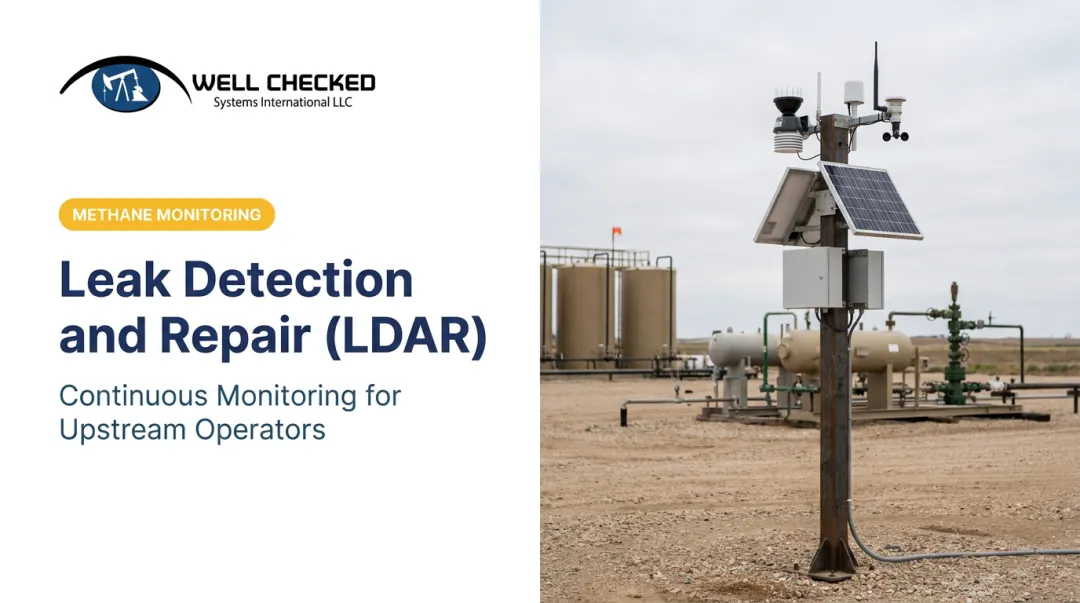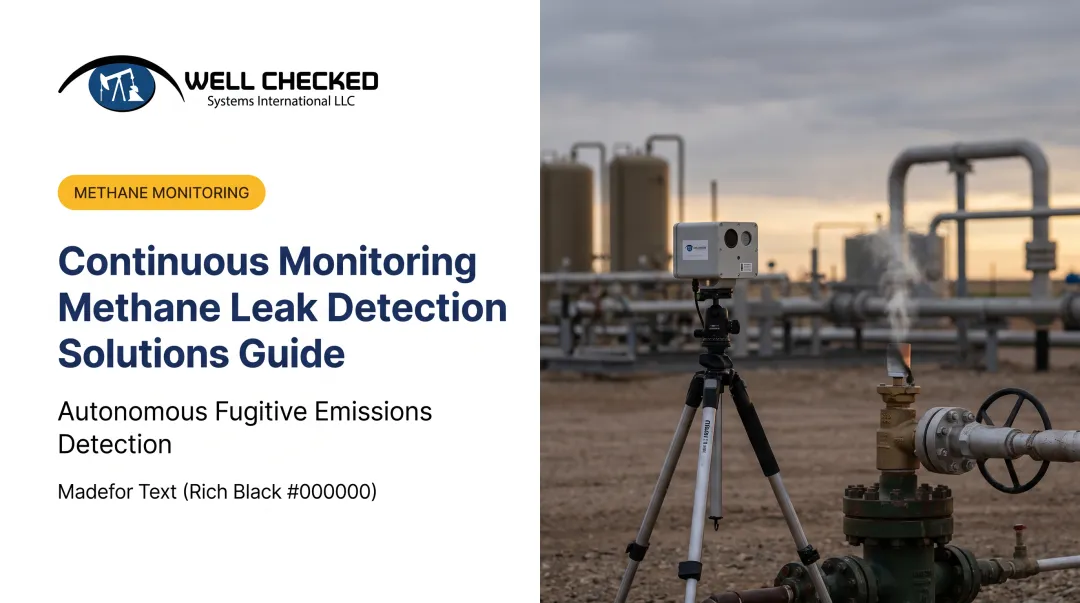

That gap matters. A 2022 peer-reviewed study of California's oil and gas LDAR program found that even with rigorous quarterly Method 21 surveys covering nearly 2 million components, leaks kept surfacing between inspection cycles. The program worked, but it also proved that periodic snapshots miss real-time events.
Now add regulatory pressure. EPA's 40 CFR Part 60 Subpart OOOOb is reshaping fugitive-emissions rules for new and modified sources, while OGMP 2.0, SASB, and TCFD frameworks demand measurement-based reporting operators can defend. This guide breaks down what LDAR actually requires, why the old model falls short for methane, and how continuous monitoring is changing the compliance equation.
Key Takeaways
- LDAR programs must find and fix components that leak VOCs and methane under EPA rules
- Quarterly and AVO-based inspections leave detection gaps between site visits
- Multi-sensor continuous monitoring (video, infrared, acoustic) closes those gaps with defensible records
- EPA OOOOb repair timelines vary by detection method, not one universal deadline
- Continuous data speeds response and strengthens EPA and ESG audit trails
What Is an LDAR Program?
LDAR stands for Leak Detection and Repair. It is a compliance loop: identify leaking components, monitor and characterize the leak, then repair and verify the fix. Components typically covered include valves, pumps, connectors, compressors, and tanks.
The regulatory backbone for new and modified upstream sources is 40 CFR Part 60 Subpart OOOOb, which names two accepted detection methods:
- EPA Method 21: a portable instrument probes each component interface and records concentration readings
- Optical Gas Imaging (OGI): infrared cameras visualize gas plumes, offered as an Alternative Work Practice
Where LDAR Applies Upstream
In upstream oil and gas, LDAR typically covers wellheads, tanks, compressors, and pipeline components spread across remote, often difficult-to-access sites. That geography is exactly what makes quarterly windshield-time inspections expensive and incomplete. The next section covers why those gaps matter.

Why Traditional LDAR Falls Short for Methane
Quarterly and AVO (audible, visual, olfactory) inspections aren't worthless. The California study cited above documented an estimated 5,400 metric tons of methane emission reductions in 2018 alone from consistent quarterly surveys. But the same data revealed thousands of active leaks between each survey window. Those leaks simply weren't visible until the next scheduled visit.
That detection gap has real financial weight. Route-based, operator-style site visits commonly run $1 million to $5 million or more annually for mid-to-large operators. That figure doesn't include the leaks missed while trucks are en route to the next site.
Beyond cost, traditional programs carry three compounding problems:
- Safety exposure — routine travel to remote or hazardous sites adds traffic, weather, and terrain risk with every visit
- False-alarm fatigue — simple sensor-only setups without discernment logic flood teams with alerts, and real events get lost in the noise
- Blind windows — a leak that starts the day after inspection can run undetected for weeks
Independent aerial measurement backs this up at scale. A 2024 Stanford-summarized study using nearly one million aerial measurements found methane loss rates averaging 3% of production volume in surveyed regions. That is roughly triple the 1% federal estimate. The gap between what regulators assume and what's actually leaking is wider than most programs account for.

How Continuous Monitoring Transforms LDAR Programs
Continuous monitoring flips the model from periodic snapshots to 24/7 surveillance. Multi-sensor systems watch the site constantly — video, Long-Wave Infrared OGI, and acoustic sensing — instead of waiting on a quarterly visit.
The real gain is discernment. AI-enabled platforms learn what normal looks and sounds like at each site, then flag only deviations from that baseline. Field teams work an operate-by-exception model: alerts on validated anomalies, not a pile of false positives.
How Well Checked's Zensory.ai™ Approaches This
Well Checked's platform structures this into three tiers:
- Zentinal Ops™ — high-resolution video and acoustic intelligence that spots abnormal sound across the site
- Zentinal Core™ — fuses multi-sensor data, filters routine process activity, and alerts only on true fugitive anomalies
- Zentinal IQ™ — turns validated events into regulatory-ready records (volume, duration, rate)
Each new site runs a ~two-day AI Site Learning cycle to build a site-specific operating baseline. After that, Zentinal Core separates routine equipment behavior from genuine leaks or malfunctions, processing continuous video, acoustic, and infrared streams at scale.
When Core validates an event, Zentinal IQ writes the quantified record — methane volume, duration, and rate — so teams can run an acknowledge-dispatch-mitigate workflow within 24 hours and catch problems before they become fines.
That same quantified trail also strengthens the compliance file. EPA's Alternative Test Method pathway lets providers submit continuous-monitoring systems for evaluation, but current approvals cover periodic-screening and super-emitter methods — not blanket continuous-monitoring approval. Treat continuous data as a layer alongside required OGI or Method 21 surveys, not an automatic replacement for them.

Building an Effective Continuous LDAR Program: Best Practices
A strong continuous LDAR program pairs technology with disciplined process. Build on these foundations:
- Maintain a component inventory with unique identifiers tied to your P&IDs for traceability
- Define leak thresholds and escalation criteria aligned to your applicable OOOOb or state-plan requirements
- Document repair timelines carefully: these vary by detection method, not a single flat deadline
- Layer continuous sensing with periodic verification to satisfy both regulatory and operational needs
- Structure data for multiple frameworks (EPA, OGMP 2.0 Level 4/5, SASB, and TCFD each expect different formats)
- Train technicians continuously and keep a written LDAR program document, updated at least annually
Repair Deadlines Depend on Detection Method
Under OOOOb, the repair clock depends on how the leak was found:
| Detection Method | First Attempt | Final Repair |
|---|---|---|
| AVO | 15 days after detection | 15 days after first attempt |
| OGI or Method 21 | 30 days after detection | 30 days after first attempt |
| Cover/closed vent system defect | 5 days after detection | 30 days after detection |
Getting this wrong on a compliance submission is a documented, avoidable mistake. Build your escalation workflow around the correct clock for each detection type.
Compliance and ESG Benefits of Continuous Methane LDAR
Timestamped, continuous records hold up better under audit than a quarterly snapshot. When a regulator or ESG auditor asks "when did this leak start and how much escaped," a program with continuous data has an answer. A periodic-only program often doesn't.
That granularity pays off in a few concrete ways:
- Repair-vs-maintenance ROI: Exact leak duration and volume data lets teams weigh a quick patch against full component replacement
- Fewer site visits: Less operator-route driving cuts vehicle miles and the associated carbon footprint
- Stronger financial case: Early, validated detection limits exposure to escalating EPA waste emissions charges
EPA's Waste Emissions Charge under the Methane Emissions Reduction Program hits $900 per metric ton for wasteful emissions in 2024, rising to $1,200 in 2025 and $1,500 in 2026 and beyond for facilities over the reporting threshold.

For operators reporting under OGMP 2.0 Level 4/5, SASB, or TCFD, this same continuous data becomes the backbone of measurement-based disclosures, replacing estimated emission factors with source-level, validated figures.
Frequently Asked Questions
What is an LDAR program?
LDAR (Leak Detection and Repair) is the EPA-driven system requiring operators to locate and fix leaking components that emit VOCs and methane. It applies broadly across oil and gas facilities, from wellheads to compressor stations.
How often do LDAR inspections need to be completed?
Frequency depends on facility type and detection method, ranging from monthly at compressor stations to quarterly or semiannual at well sites under OOOOb. Continuous monitoring supplements these fixed intervals by catching events between scheduled surveys.
What is the difference between AVO and continuous monitoring in LDAR?
AVO relies on a technician's audible, visual, and olfactory senses during a scheduled site visit. Continuous monitoring uses always-on sensors (video, infrared, and acoustic) that watch the site 24/7 without needing a human present.
What equipment or technology is used in modern LDAR programs?
Modern programs use OGI cameras, Method 21 analyzers, acoustic sensors, and increasingly, multi-sensor AI platforms that combine all three into one continuous detection system.
How does continuous LDAR monitoring reduce costs for operators?
It cuts route-based site-visit expenses that run $1 million to $5 million or more annually for mid-to-large operators. Faster repair decisions also help operators avoid escalating EPA penalty exposure.
Is continuous monitoring accepted as an alternative to traditional LDAR methods?
EPA allows operators to submit continuous-monitoring technologies through its Alternative Test Method pathway under OOOOb. Current approvals focus on periodic-screening and super-emitter methods, so continuous data works best paired with required OGI or Method 21 surveys.