
Some methane is unavoidable biology, cows digest, waste decomposes. But a large share is preventable, tied to equipment choices, maintenance habits, and management decisions. This article breaks down how methane builds up, what drives it, and which strategies actually work.
Key Takeaways
- Methane is the principal component of natural gas, so leaks are lost saleable product and a reportable event
- Emissions build up gradually through leaks, digestion, and decomposition — often invisible until measured
- Main drivers: fossil fuel operations, livestock, rice cultivation, and manure management
- Effective strategies combine operational fixes, continuous monitoring, and policy alignment
- No single fix works everywhere; strategy must match the source
How Methane Emissions Typically Build Up
Methane rarely announces itself with a dramatic event. It accumulates quietly, through small leaks, biological processes, and neglected infrastructure.
In oil and gas, buildup is often episodic and hidden. A single leaking valve or compressor seal can run for weeks undetected. A study of US basins found that super-emitting sources accounted for roughly 50% of emissions in the study area, with events frequently lasting more than two hours before self-correcting or being noticed. Another peer-reviewed analysis found that most intermittent leaks stay invisible through an entire year of periodic inspections, regardless of inspection frequency.

In agriculture, buildup is biological and constant. Enteric fermentation and manure storage don't spike—they steadily emit. There's no single leaking part to find and fix.
This distinction matters:
- Oil and gas leaks need continuous, real-time detection to catch short, hidden events
- Agricultural sources need ongoing process management for constant biological emissions
Either way, most methane sources are invisible to the naked eye. They surface only through direct measurement, aerial surveys, or regulatory audits.
Key Drivers of Methane Emissions
EPA ranks agriculture as the largest US methane source, followed by natural gas and petroleum systems, then landfills. Each driver behaves differently.
Fossil fuel operations: Leaks, venting, and incomplete flaring dominate here. Within oil and gas, production and gathering activities account for roughly 60% of methane from this segment, per EPA data. This driver is growing fast as production scales.
Livestock digestion and manure: Enteric fermentation made up nearly 27% of US anthropogenic methane in EPA's 2020 inventory, with manure management adding another 9%. Growing herd sizes and wet manure storage systems make this worse over time.

Decomposition: Landfills, wetlands, and flooded rice paddies release methane through natural and human-influenced breakdown of organic matter.
Some of these drivers are locked in early:
- Equipment choice at the design stage
- Herd size and breed selection
- Manure storage system design
Others are shaped by ongoing conditions:
- Temperature and seasonal variation
- Monitoring frequency
- Maintenance lag time
Driver significance varies by sector and region. A Permian Basin operator and a Midwest dairy farm need entirely different mitigation playbooks.
Strategies for Reducing Methane Emissions
Effective methane reduction falls into three buckets: decisions made upfront, active management and monitoring, and the broader operating context. Skipping any one leaves gaps.
Strategies That Reduce Emissions Through Better Decisions
Choices made at the design stage stop emissions before they start.
- Efficient equipment selection — Low-leak valves and dry compressor seals chosen at design prevent future fugitives. EPA's Natural Gas STAR program linked wet-to-dry seal replacements to over 1 million Mcf in partner-reported reductions
- Improved livestock diets — Higher-digestibility feed reduces enteric methane per unit of production, though it must be balanced against intake and cost
- Lower-emission rice design — Alternate Wetting and Drying (AWD), planned upfront, cut growing-period methane by 41–73% in USDA field studies without yield loss
- Internal procurement policies — Setting emissions targets before equipment purchase avoids retrofitting costs later
Strategies That Reduce Emissions Through Better Management and Monitoring
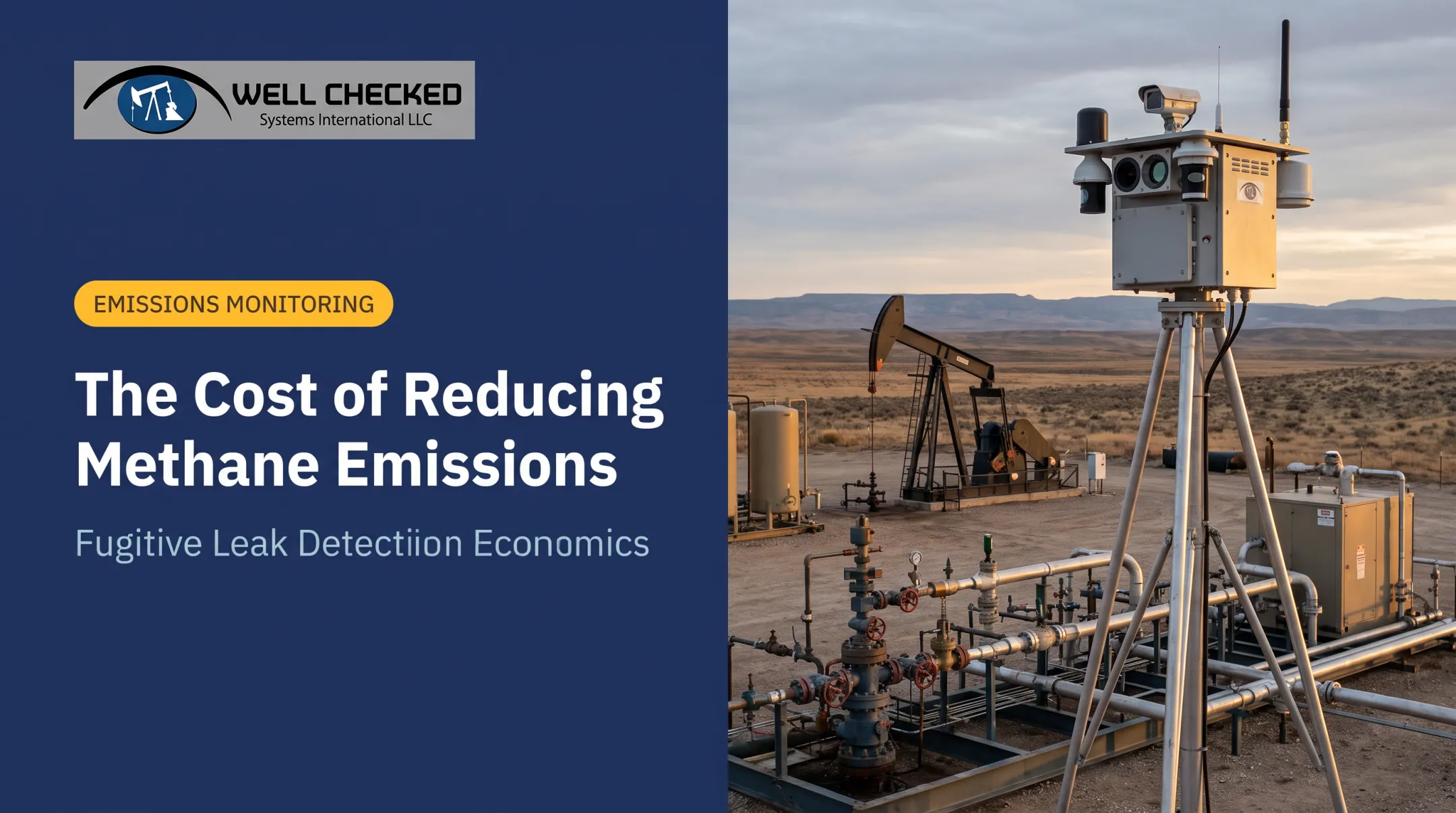
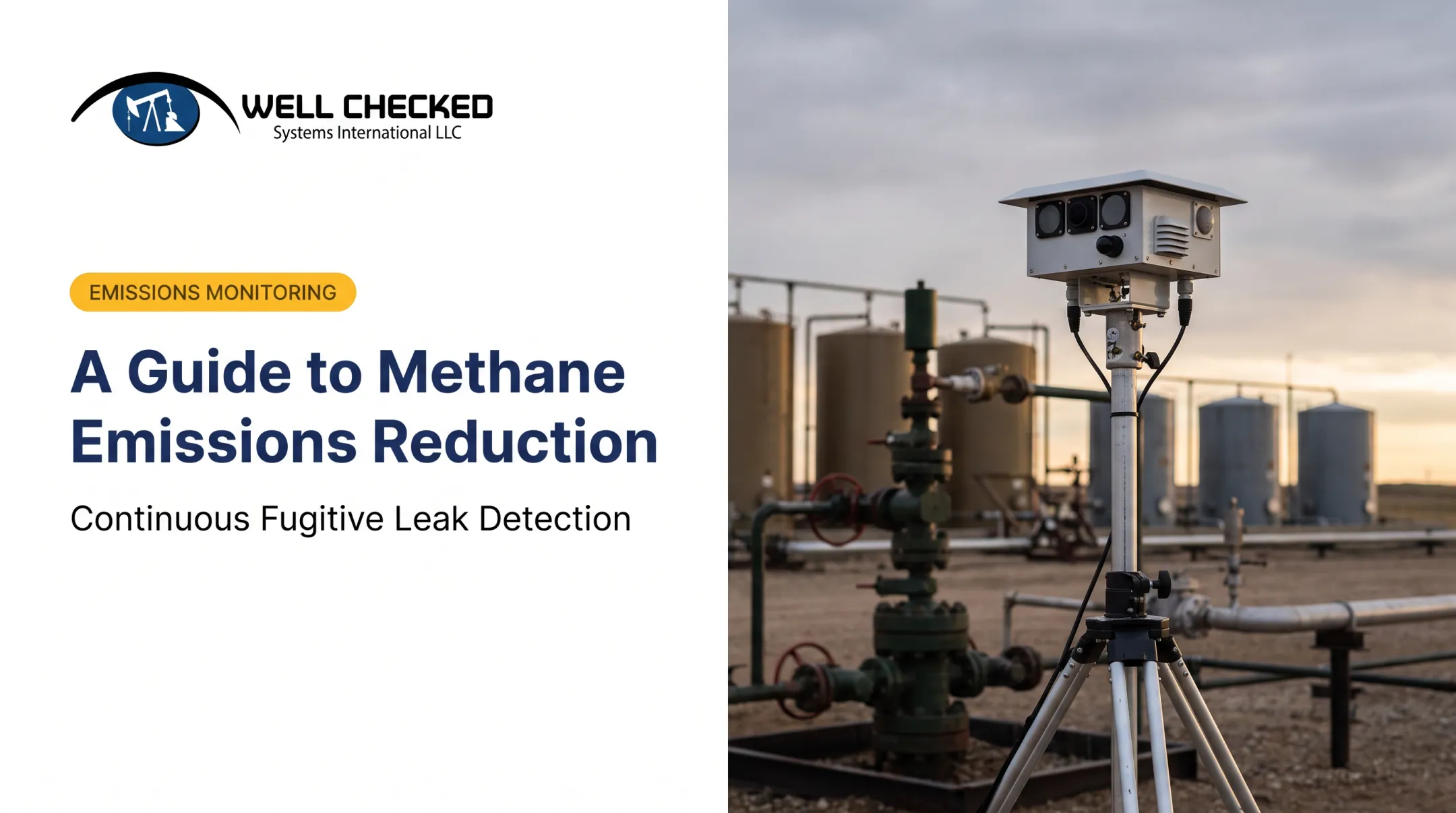
This is where ongoing vigilance replaces guesswork. Continuous, multi-sensor monitoring catches what periodic inspections miss. A Canadian LDAR study found that quarterly optical gas imaging surveys detected only a fraction of what independent aerial surveys found, missing 12 times more methane overall at the same sites. Periodic inspections simply can't catch short-lived, episodic leaks. Continuous platforms close that gap. Well Checked Systems' Zensory.ai™ combines high-resolution video, acoustic AI, and Long-Wave Infrared Optical Gas Imaging to watch wellsites 24/7 instead of quarterly. A roughly 2-day AI Site Learning cycle builds a normal operating baseline per site, then filters false alarms so crews aren't chasing noise. When a validated fugitive event is flagged, the workflow moves through acknowledge, dispatch, and mitigate within 24 hours—producing a dated record of how that event was addressed. Deployed across remote sites, the platform processes continuous video, acoustic, and infrared streams on site. Without that oversight, leaks stay invisible between inspection cycles. Traditional route-based inspections can still cost mid-sized to large operators $1 million to $5 million or more annually and never close the detection gap. Quantification matters once a leak is validated. Well Checked's Zentinal IQ™ tier estimates methane volume, duration, and rate after Core confirms an event, with records formatted for EPA Subpart OOOOb alternative-monitoring pathways and OGMP 2.0 Level 4/5 reporting. Operators can then prioritize repairs by actual loss, not guesswork. Other management-side strategies:

- Manure management — Covered lagoons, methane capture, and biogas digesters intercept emissions before release. EPA's AgSTAR program reports over 400 operational manure-based digestion projects nationwide as of mid-2024
- Feed additives — 3-NOP reduced methane production by an average of 36.2% across 17 peer-reviewed beef-cattle studies, under veterinary guidance and correct dosing
- Rapid-repair protocols — Once leaks are validated, prioritize repairs by volume and duration of loss, not just by discovery date
Strategies That Reduce Emissions Through Addressing Broader Context
Progress often stalls in the system around the source—not at the source alone.
- Integrated carbon strategy — Align methane reduction with CO2 mitigation instead of running separate programs
- Regional coordination — Share resources such as water management for rice AWD or multi-farm manure programs
- Viable policy support — Back methane pricing and enforceable rules that make abatement workable for smaller operators
- Barrier diagnosis — Treat regulatory clarity, financing access, or aging infrastructure as the real blockers when the source itself is already understood
Conclusion
Reducing methane emissions starts with a diagnosis: is the source decision-driven, management-driven, or context-driven? A leaking thief hatch, a missed LDAR route, and a multi-pad site too remote for weekly visits all need different fixes.
Continuous, defensible monitoring turns methane reduction from a reactive compliance scramble into a proactive operational advantage. Operators catch problems in hours instead of discovering them at the next quarterly audit—and act by exception, not by the next scheduled drive-by.
Frequently Asked Questions
How to reduce methane emissions in cows?
Focus on improving diet digestibility, adding feed additives like 3-NOP (shown to cut enteric methane by over 36% in meta-analysis), and breeding for lower-emission traits over time.
Is it possible to collect methane from cows?
Direct capture from burps isn't practical with current technology. However, manure-based biogas digesters can capture methane from waste, and EPA counts over 400 such projects operating nationwide.
How much methane does a cow emit?
A USDA grazing-beef study measured 0.27 to 0.34 kg (about 0.60–0.75 lb) per cow per day, varying by season, breed, diet, and production stage. EPA's broader public estimate puts annual output at 154-264 pounds per cow.
Does feeding cows seaweed reduce methane?
A Montana field study found seaweed-derived bromoform (Asparagopsis) reduced enteric methane by 37.7% in grazing beef cattle. Commercially, FDA has not approved bromoform additives; it treats them as unapproved animal drugs under enforcement discretion.
What can reduce methane?
Design choices (equipment, diet, irrigation), day-to-day practices (continuous detection, manure capture, feed additives), plus policy and financing that make those practices stick. No single step is enough on its own.
Do cows release methane when they burp?
Yes. Eructation, not flatulence, is the primary release pathway from enteric fermentation, with most methane exiting through the mouth during belching and exhalation.