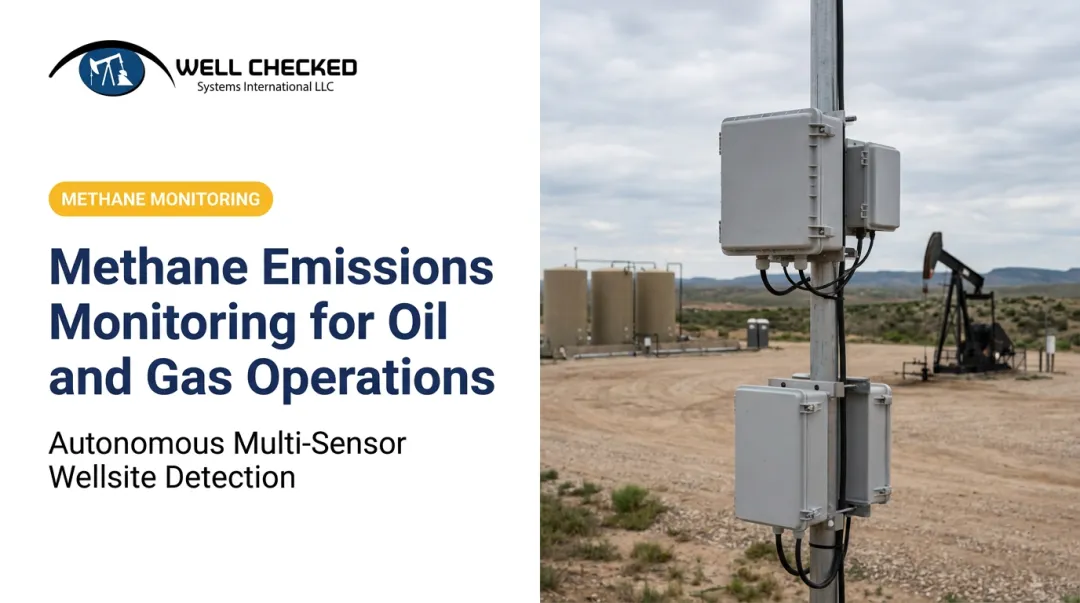

Methane is the primary component of natural gas, so every fugitive release is lost product and a reportable event. That's a big reason regulators keep tightening the screws. Operators are responding by shifting from periodic inspections toward continuous, AI-driven monitoring that never stops watching.
This article breaks down the leading emissions monitoring providers serving US energy facilities, what separates them technically, and how to pick the right partner for your basin.
Key Takeaways
- Emissions monitoring services detect, quantify, and report methane, VOCs, NOx, and CO2 from energy facility operations
- EPA OOOOb, OGMP 2.0, and SASB/TCFD are driving demand for regulatory-defensible emissions data
- Leading providers split by niche: autonomous wellsite AI, LDAR/satellite hybrids, and stack systems
- Choose on false-alarm filtering, scalability, and proven field deployment—not brand name
- Continuous, multi-sensor, autonomous platforms are replacing route-based inspection visits
Overview of Emissions Monitoring Services in the US Energy Industry
Emissions monitoring services cover the technologies and field programs that detect, quantify, and report pollutants from energy operations, primarily methane, VOCs, NOx, and CO2. These range from handheld optical gas imaging cameras to fixed stack analyzers to fully autonomous wellsite platforms.
Regulation is accelerating the move from periodic inspections to continuous monitoring. For US operators, the key drivers include:
- EPA Subpart OOOOb — applies to oil and gas facilities constructed, modified, or reconstructed after December 6, 2022, per the current eCFR text
OGMP 2.0 Level 4/5 — requires source-level measurement, reconciled with independent site-level data for Gold Standard status
- SASB and legacy TCFD frameworks — now folded into ISSB reporting standards, still shaping ESG disclosure expectations
Note: EPA's methane waste charge rule was rescinded via Congressional Review Act action in 2025, so it's not currently a payable obligation, even though many operators still model for its possible return.
With that regulatory picture in mind, here's how the leading providers stack up.
Top Emissions Monitoring Services for Energy Facilities
Choosing a provider comes down to five things: continuous versus periodic capability, regulatory-defensible output, multi-sensor technology, deployment scale, and a real operating track record. Four prominent players stack up as follows.
Well Checked Systems (Well Checked)
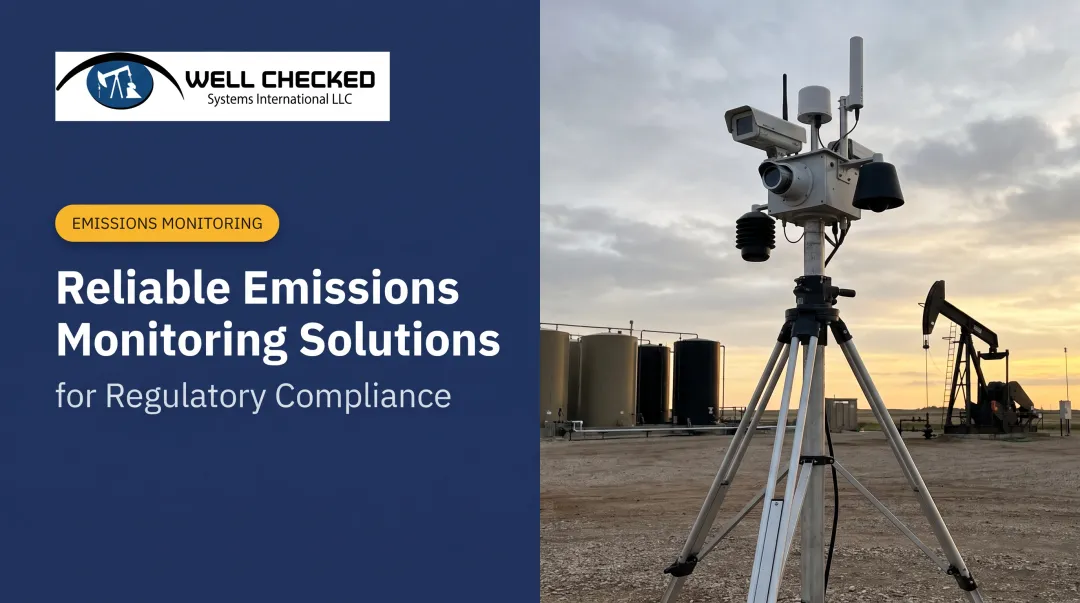
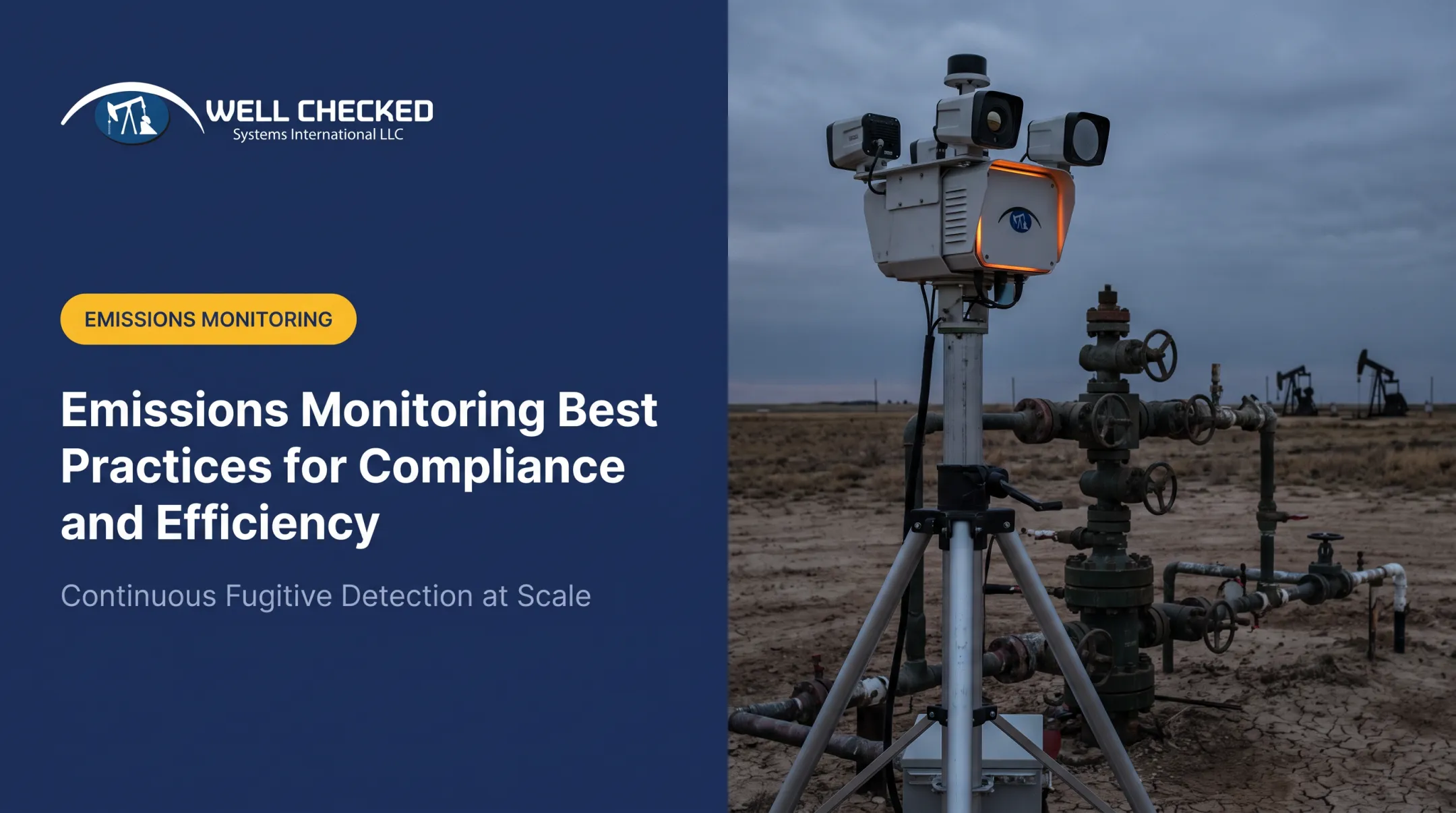
This Oklahoma-based company brings 13+ years of operating experience to autonomous wellsite monitoring. Its Zensory.ai™ platform fuses high-resolution video, Long-Wave Infrared optical gas imaging, and acoustic AI into a single edge-computing system. That stack is deployed across remote US wellsites, including a confirmed program in the Appalachian Basin with a large Appalachian operator. What sets it apart is the three-tier architecture:
- Zentinal Ops™ — delivers 360-degree visual and acoustic intelligence
- Zentinal Core™ — fuses sensor streams and filters false alarms, alerting only on true fugitive anomalies
- Zentinal IQ™ — quantifies validated events for EPA, OGMP 2.0, SASB, and TCFD-aligned reporting Operational details at the site level:
- Roughly 2-day AI Site Learning cycle to baseline normal operations before anomaly flagging
- Continuous video processed on site at every monitored location
- Automatic re-learning when site configuration changes
Attribute Details Monitoring Approach Continuous multi-sensor (sight, sound, gas) autonomous detection with edge computing Regulatory Alignment Structured for EPA OOOOb, OGMP 2.0 Level 4/5, SASB, TCFD reporting Coverage Major US oil & gas basins

LDAR Service Providers With Satellite Add-Ons
Some established LDAR compliance-service firms have extended their portfolios to include continuous and satellite-based monitoring. Key characteristics:
- Broad service range spanning compliance testing and continuous detection
- Satellite methane-monitoring offerings layered onto field services
- OGMP 2.0 advisory support for operators building Level 4/5 programs
Attribute Details Monitoring Approach Combination of continuous optical remote sensing, mobile CEMS, and satellite detection Regulatory Alignment LDAR, OGMP 2.0 support, permitting/regulatory reporting advisory Coverage Major US oil & gas basins plus select international markets
Stack Analyzer Instrument Manufacturers
Instrument manufacturers supply the analyzer hardware that underpins traditional CEMS programs: chemiluminescence NOx units, NDIR CO analyzers, and FTIR-based systems. Those instruments pair with data acquisition and handling system integration for combustion sources. The differentiators in this category are decades of EPA method validation (Method 7E, Method 10) and extensive technical support and training networks.
| Attribute | Details |
|---|---|
| Monitoring Approach | Continuous stack gas analyzers plus periodic stack testing support |
| Regulatory Alignment | EPA Method 7E/10, NSPS, NESHAP, Title V permit compliance |
| Coverage | US-wide, data centers, power generation, industrial combustion sources |
Operator-Built Internal Programs
Some major integrated operators run centralized, global methane-monitoring hubs, combining IoT sensors, infrared cameras, drone-mounted units, and satellite feeds across their own operated upstream assets, with sensors deployed at scale. Independent testing and qualification facilities are used to validate detection technologies against known release rates.
| Attribute | Details |
|---|---|
| Monitoring Approach | Multi-technology: IoT, infrared cameras, pyrometers, drones, satellite, predictive emission modeling |
| Regulatory Alignment | Internal near-zero methane target aligned with global reporting frameworks |
| Coverage | Global operated upstream assets |
| Comparability note: This is an owner-operator's internal program, not a third-party service offering, so it is not directly comparable to vendor-for-hire platforms. |

How to Choose the Right Emissions Monitoring Partner
The most common mistake operators make? Picking a vendor based on price or brand recognition without checking whether the output actually holds up in an EPA OOOOb or OGMP 2.0 submission. A flashy dashboard means nothing if the underlying data can't survive an audit.
Before signing anything, dig into technology fit:
- Does the system distinguish true fugitive emissions from normal flaring, venting, or process activity?
- How many false alarms does it generate, and who reviews them?
- Can it operate reliably at remote sites with limited connectivity?
Scalability matters just as much as accuracy. Ask how many sites the provider currently monitors and how long they've operated in the field. Then confirm they've expanded across multiple basins as reporting footprints grow. A vendor with two years of pilot data looks very different from one with over a decade of continuous field operations.

Track record alone isn't enough if the data can't travel the compliance pathway. EPA's Alternative Test Method program approves specific detection methods and thresholds, not vendors broadly, per the agency's current oil and gas test method list. Confirm your provider's data output aligns with an approved pathway before you commit budget to it.
Conclusion
Selecting an emissions monitoring partner comes down to three things:
- Regulatory defensibility
- Autonomous detection accuracy
- Proven deployment scale
Brand name alone won't cut it when EPA or an OGMP auditor comes asking questions.
Weigh the total cost of continuous monitoring against what route-based site visits actually cost your operation in labor, fuel, vehicle wear, and missed leaks between inspections. Then think ahead: will this platform still make sense as EPA and ESG requirements tighten further over the next five years?
For operators moving from periodic route-based site visits to continuous, defensible monitoring, Well Checked's Zensory.ai™ platform is worth a close look. Its field experience and a three-tier path from detection to regulatory-ready quantification give you a practical way to evaluate fit before you scale.
Frequently Asked Questions
What software is used for emissions reporting?
Enterprise ESG platforms handle Scope 1/2/3 reporting at the corporate level. Field-level monitoring platforms like Zensory.ai™ feed measured emissions data into those systems.
What is a CEMS monitoring system?
A Continuous Emissions Monitoring System uses stack-mounted gas analyzers to continuously measure pollutants like NOx, CO, and CO2 from combustion sources, primarily for regulatory reporting under EPA methods.
What are the four types of environmental monitoring?
Energy facilities use four main approaches: continuous, periodic/scheduled, mobile, and remote/satellite-based monitoring. Most sites combine several based on facility type and regulatory requirements.
What regulations require emissions monitoring at US oil & gas facilities?
EPA's 40 CFR Part 60 Subpart OOOOb, state agency permits, OGMP 2.0 for voluntary reporters, and SASB/ISSB frameworks for public companies set the core requirements.
How does AI improve emissions monitoring accuracy?
AI and machine learning learn a site's normal operating behavior, typically within a couple of days, then filter out routine process activity so alerts focus on genuine fugitive emissions rather than noise.
How much does emissions monitoring typically cost operators?
Costs vary by technology, site count, and basin. Route-based manual inspections add ongoing labor, travel, and vehicle costs that scale with fleet size, so many mid-to-large operators evaluate continuous monitoring as a lower long-term alternative.