
Research from Stanford's 2024 review of US oil and gas operations found methane emissions from major operations run higher than government predictions, with lost commercial value estimated at over $1 billion annually. That's product operators paid to extract and never got to sell.
Traditional detection — operator routes, manual walk-downs, quarterly LDAR surveys — was built for a world with looser rules and lower stakes. That world is gone. This guide breaks down the detection technologies available today, how they stack up, what they cost, and how AI-enabled platforms like Zensory.ai™ are reshaping wellsite monitoring.
Key Takeaways
- Detection technologies (OGI, laser, catalytic) each suit different leak types and site conditions
- Multi-sensor, AI-driven systems cut false alarms and produce defensible, continuous compliance data
- EPA's methane rule (40 CFR Part 60 Subpart OOOOb) and OGMP 2.0 push operators toward measurable, continuous monitoring
- Costs range from a few hundred dollars for handhelds to autonomous programs replacing $1M–$5M+ in annual route costs
Understanding Gas Leak Detection Technologies in Oil & Gas
No two leaks behave the same way, which is why the industry relies on several distinct sensing approaches rather than one universal tool.
Common approaches include:
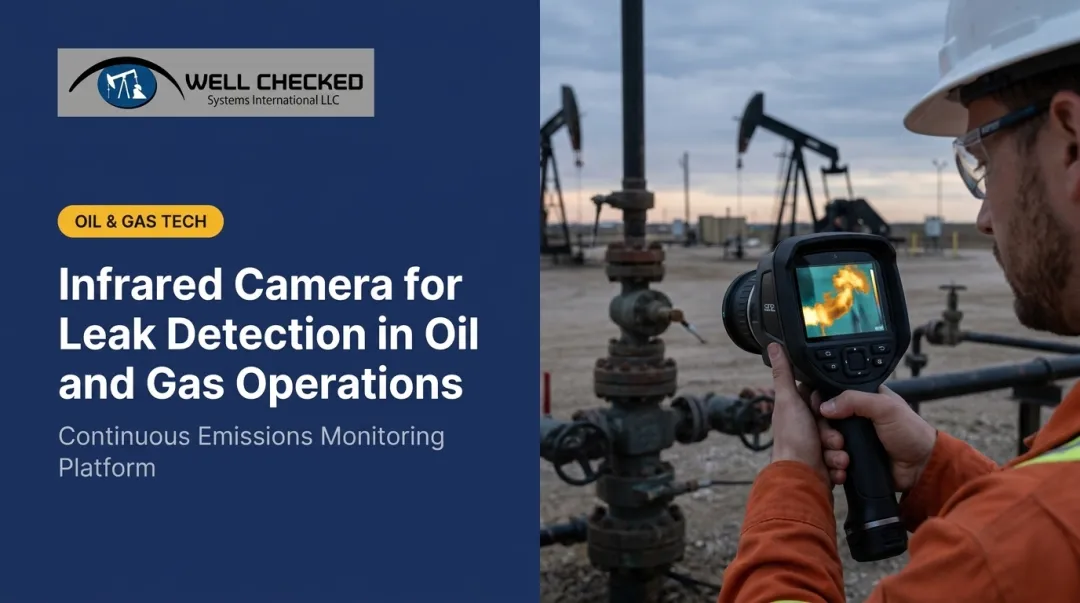
- Optical Gas Imaging (OGI) and Long-Wave Infrared (LWIR): Visualizes methane and VOC plumes day or night and shows where the gas is coming from, not just that it exists.
- Laser-based sensing: Extends coverage across long distances for pipeline-length monitoring. Distributed fiber systems measure temperature, strain, vibration, and acoustic signals along a cable route.
- Catalytic and electrochemical point sensors: Remain standard for confined-space personal monitoring, where a worker needs an immediate go/no-go reading before entry.
Field studies put practical OGI detection limits for experienced operators around 3.29 standard liters per minute of methane, with a documented range of 2.6 to 7.7 L/min depending on conditions.

Which Method Is Most Reliable and Why
No single technology wins outright. Sight-based tools miss leaks obscured by steam or dust. Sound-based tools struggle near noisy compressors. Gas-specific sensors need proximity to the source.
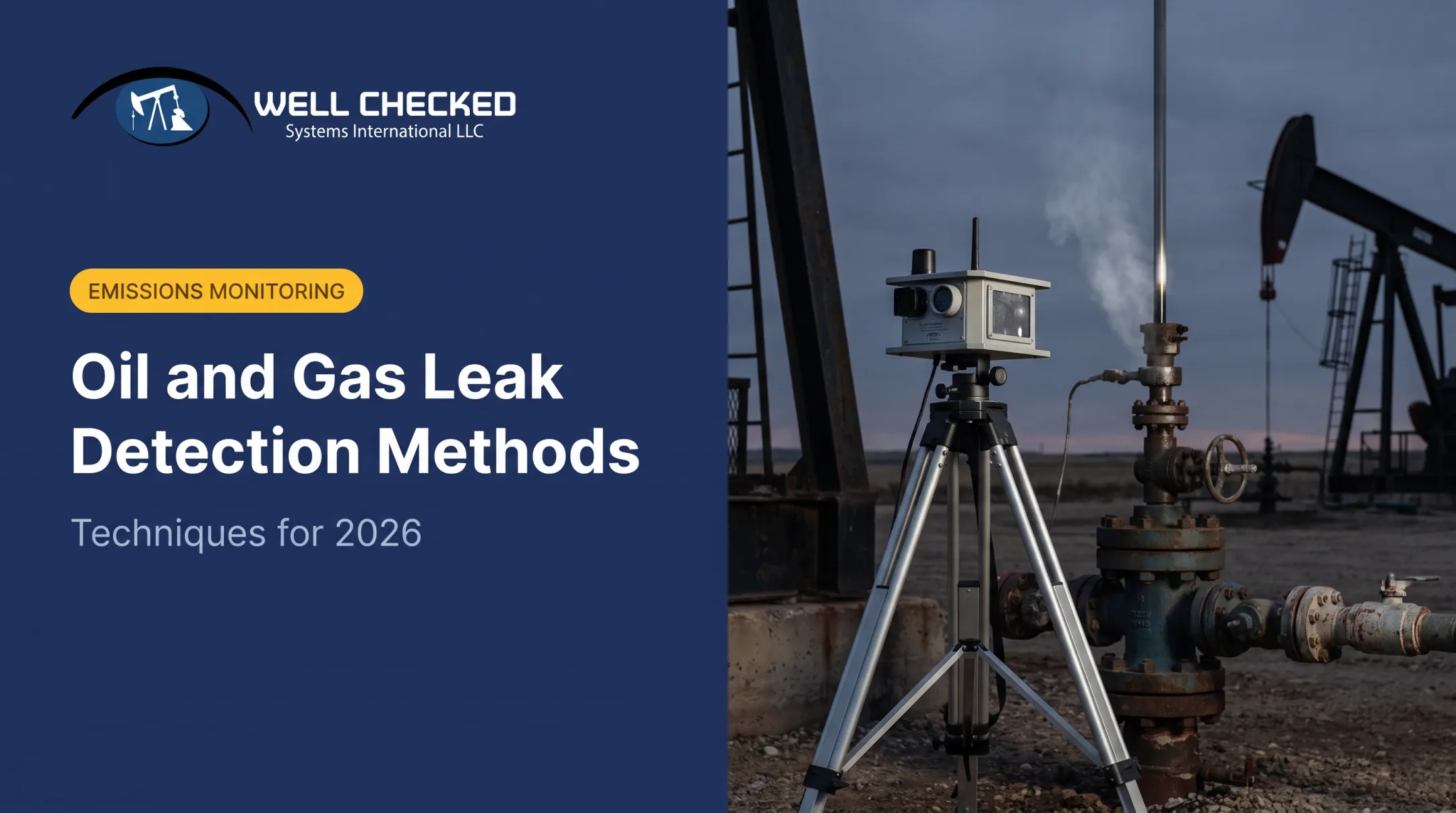
The more dependable approach combines modes so they cross-validate each other. Well Checked's Zensory.ai™ platform layers high-resolution video, LWIR OGI, and acoustic AI so an event must register across sensor types before it counts as a genuine fugitive emission, not a bird, a truck, or normal flaring.
The Shift from Periodic Inspections to Continuous Autonomous Monitoring
Quarterly LDAR and operator-route inspections were designed around limited technology and lower regulatory pressure. An operator drives a route, checks gauges, looks and listens, and moves on. Between visits, a leak can run undetected for 90 days or more.
Continuous remote monitoring flips that model:
- Coverage never stops: sensors watch 24/7 instead of during a brief site visit
- Fewer vehicle miles: less driver exposure to traffic, weather, and site hazards
- Data is continuous, not a snapshot: supporting defensible compliance records
The catch with early continuous-monitoring systems was alert fatigue. Flaring, venting, and routine process emissions can trigger false alarms if a system can't tell "normal" from "abnormal."
This is where AI Site Learning matters. A system observes a site's baseline behavior (Well Checked's platform does this in roughly two days per site), then flags only what deviates from it.
That shift enables an "operate by exception" model. Field teams stop driving predetermined routes and instead get dispatched only when a validated anomaly appears.
The Zensory.ai™ Three-Tier Architecture
Well Checked structures this around three layers:
- Zentinal Ops™: visual and acoustic site intelligence, providing 360° coverage
- Zentinal Core™: fuses video, LWIR OGI, and acoustic data to detect true fugitive events and filter out noise
- Zentinal IQ™: quantifies only Core-validated events, producing volume, duration, and rate data for regulatory submissions

That layered approach matters because the underlying problem is large. A 2022 peer-reviewed study estimated active US onshore low-production wellsites released 4 teragrams of methane in 2019, with a 95% confidence range of 3 to 6 Tg. That's methane escaping sites that, in many cases, were only visited a handful of times per year.
Devices and Systems Available Today
Operators generally choose from three categories, and most mature programs use more than one:
- Portable handheld detectors: OGI units for spot-checks, confirmation surveys, and confined-space entry. These stay in a technician's hands and require someone physically present.
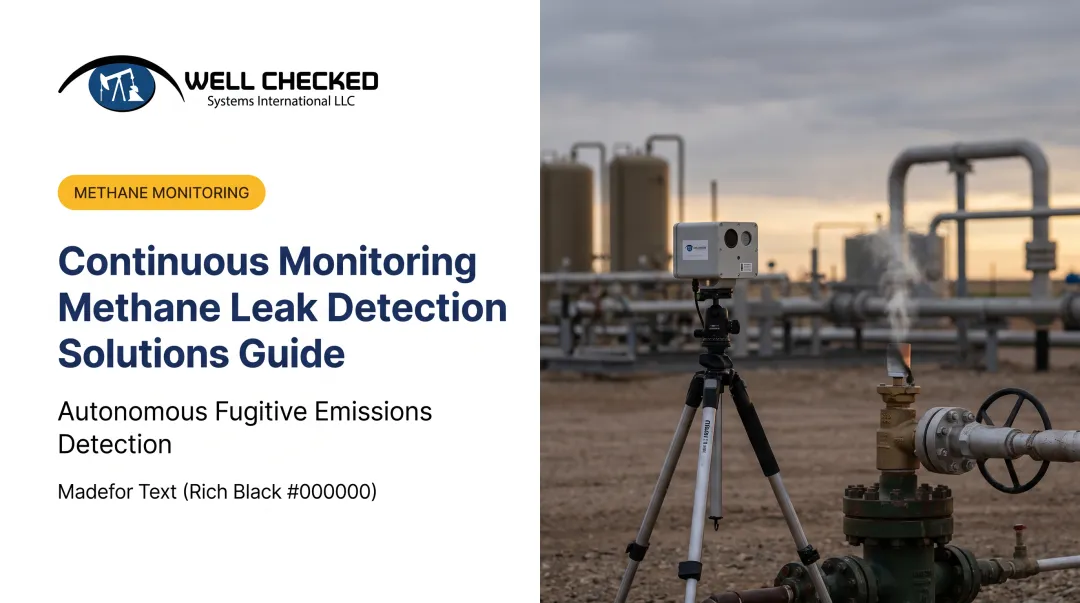
- Fixed/wireless sensor networks: IoT-connected sensors at wellheads, tanks, and compressor stations that feed data continuously rather than on a schedule.
- Edge-computing-based systems: Process data on-site rather than relying on constant connectivity. That matters at remote wellsites where cellular or satellite links are unreliable.
Well Checked's platform, for example, stores and analyzes data locally, then syncs when a connection is available. Monitoring continues regardless of network conditions.
Cost Considerations for Gas Leak Detection
Pricing spans a wide range depending on scope:
| Option | Typical Use | Cost Profile |
|---|---|---|
| Single-gas portable detector | Spot checks, confined-space entry | Low upfront cost |
| Multi-gas handheld unit | Broader inspection needs | Moderate upfront cost |
| Fixed continuous monitoring | Site-wide, 24/7 coverage | Higher upfront, lower ongoing labor |
Route-based manual inspection programs (operator trucks and quarterly LDAR contractors) often run mid-to-large operators $1M to $5M+ annually. That figure is the benchmark most operators use when evaluating whether an autonomous system pencils out.

Beyond labor savings, compliance carries its own return. EPA's OOOOb framework requires validated data transmission and a defined response workflow.
Operators who can document an acknowledge-dispatch-mitigate response within 24 hours of a validated event stand stronger when regulators review their records. That regulatory-defensible data often offsets the upfront technology investment on its own, independent of labor savings.
Best Systems for Pipeline Leak Detection
Pipeline monitoring leans on a different toolkit than wellsite monitoring, largely because the asset is linear and often runs for miles through varied terrain.
- Acoustic sensors — detect the sound signature of gas escaping under pressure along a pipeline run
- Pressure-based leak detection — API RP 1130 covers algorithmic tools that help controllers spot hydraulic anomalies suggesting a leak

Older SCADA-based pipeline leak detection has a well-known weakness: it generates false alarms from normal pressure fluctuations. Layering AI analytics on top of continuous sensing helps filter that noise, similar to how wellsite systems distinguish process emissions from fugitive ones.
Well Checked's documented deployment scope today centers on wellsite and equipment monitoring rather than pipeline infrastructure specifically. The same principle still applies across both: multi-sensor fusion beats any single signal.
Choosing the Right Solution for Your Operation
Before selecting a system, weigh these factors:
- Site remoteness — Does the location have reliable connectivity, or does it need edge computing that works offline?
- Regulatory reporting needs — Which frameworks apply (EPA OOOOb, OGMP 2.0 Level 4/5, SASB, TCFD), and what data does each require?
- Number of sites — Are you covering a handful of wells or a multi-basin portfolio? Scale changes the economics significantly.
- Existing infrastructure — Can the system integrate with your current SCADA setup via API?
When evaluating vendors, push past the marketing copy and ask specific questions:
- False-alarm filtering — How does the system distinguish routine process emissions from true leaks?
- Quantification accuracy — Can it produce volume, duration, and rate data suitable for regulatory submission?
- Integration — Does it connect with existing SCADA and ESG reporting workflows through a documented API?
Operators moving toward OGMP 2.0 Gold Standard reporting need Level 4 source-level measurement reconciled with Level 5 site-level data. Periodic manual inspections cannot clear that bar.
Choose a platform that pairs offline-capable edge computing with multi-sensor false-alarm filtering, regulatory-grade quantification, and a documented SCADA API so detection data flows straight into compliance workflows.
Frequently Asked Questions
How much does it cost to check for a gas leak?
Costs range from a few hundred dollars for a handheld detector to significant investment for enterprise-wide continuous monitoring. Compare that against route-based manual inspection programs, which often cost mid-to-large operators $1M–$5M+ annually.
What is the most reliable leak detection method and why?
No single technology is universally best. Multi-sensor fusion (combining sight, sound, and gas-specific sensing) cross-validates events and reduces false alarms more effectively than any single method.
What are the best leak detection systems for pipelines?
Acoustic sensors and pressure-based monitoring (per API RP 1130) form the core toolkit. Adding AI analytics on top reduces the false alarms common with older SCADA-only systems.
Is there a device that detects a gas leak?
Yes. Options include portable handheld OGI detectors for spot-checks, plus fixed IoT sensor networks and edge-computing systems for continuous wellsite or tank monitoring.
How often should oil and gas sites be monitored for leaks?
Quarterly LDAR surveys remain a regulatory floor, but continuous monitoring catches leaks within hours instead of months. Continuous, 24/7 coverage with near-real-time alerting is increasingly the operational standard.
What role does AI play in modern gas leak detection?
AI establishes a site's normal operating baseline, often within about two days, then flags only genuine deviations. This distinguishes true fugitive emissions from routine process activity and cuts false-alarm fatigue.