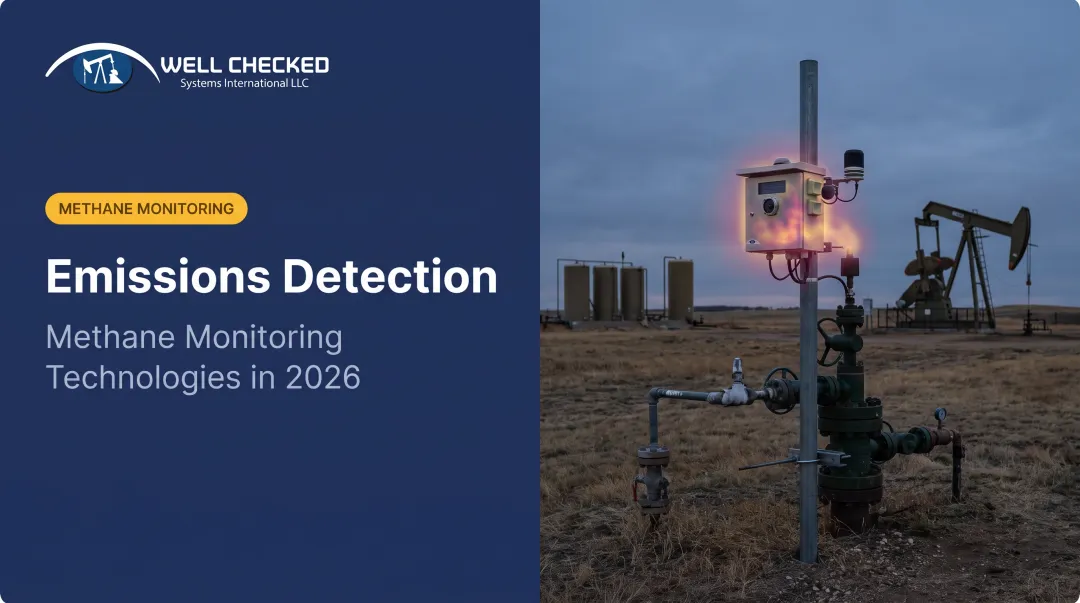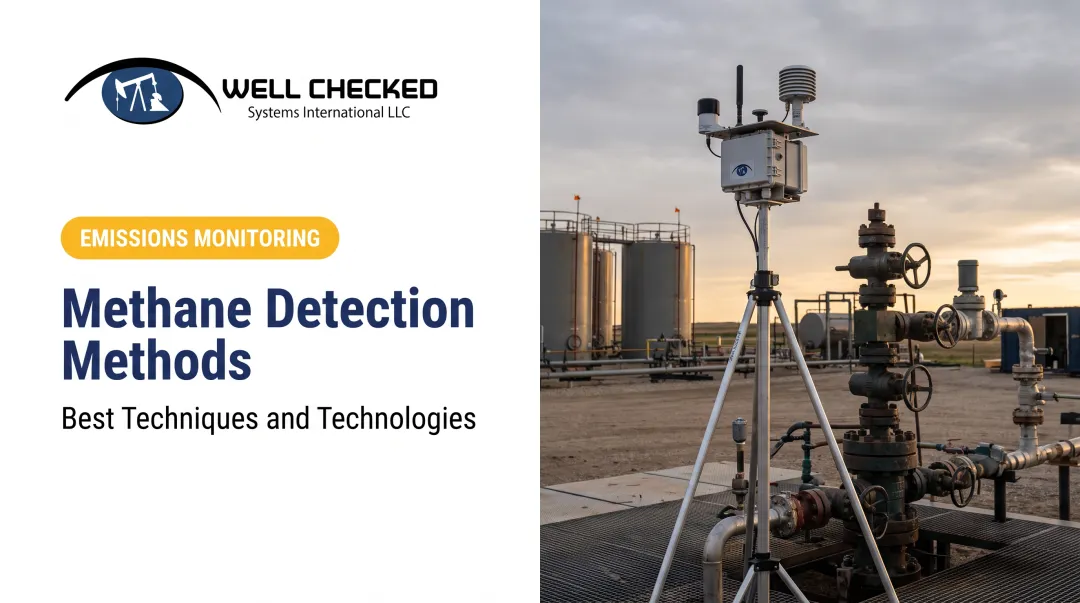

The pressure is coming from several directions at once. EPA's methane rule (40 CFR Part 60 Subpart OOOOb) sets hard monitoring schedules. OGMP 2.0 pushes measurement-based reporting. ESG frameworks like SASB and TCFD demand defensible data. Meanwhile, route-based inspections keep getting more expensive to run.
This article breaks down the main leak detection methods available today, how they differ, and how to combine them for your specific operation.
Key Takeaways
- Methods range from manual sniffers to optical imaging, acoustic sensors, and AI-driven continuous monitoring
- No single method catches every leak type — most 2026-ready programs blend several
- Continuous, multi-sensor, AI-filtered monitoring is replacing periodic-only LDAR programs
- The right mix depends on asset value, emissions exposure, budget, and reporting obligations
What Is Oil and Gas Leak Detection?
Leak detection is the process of finding, locating, and quantifying unintended hydrocarbon, methane, and VOC releases from oilfield equipment. It applies across upstream and midstream assets, including:
- Wellheads and compressors
- Tanks, valves, and flanges
- Pipelines and processing units Every unmonitored leak means lost product, regulatory exposure, and a gap in the audit trail regulators and investors expect. Detection is an operational and financial priority as much as a safety one.
Why Leak Detection Matters More in 2026
Undetected leaks are bigger and more expensive than most operators assume.
A 2024 independent aerial measurement campaign covered basins representing more than 70% of lower-48 onshore production. It measured an aggregate loss rate of 1.6%, roughly eight times the 0.2% intensity target adopted by many operators, and more than four times EPA inventory estimates. Some basins, like the Uinta, showed loss rates above 7%.

Beyond the revenue hit, there's a human cost. Operator-route travel exposes field staff to traffic incidents and site hazards on a near-daily basis. NIOSH has flagged frequent site-to-site travel as a factor in fatal motor vehicle crashes among oil and gas extraction workers.
Without proper detection, operators risk:
- Missed fugitive emissions that compound into larger losses
- EPA fines tied to OOOOb monitoring gaps
- Weak audit trails for OGMP 2.0, SASB, and TCFD disclosures
- Preventable safety incidents during routine inspections
Choosing the right combination of detection methods addresses all four at once.
Types of Oil and Gas Leak Detection Methods
No single method fits every site. Leak size, gas type, distance, budget, and regulatory need all shape the right choice. Most 2026-ready programs blend manual checks, sensor-based tools, and AI-driven monitoring rather than relying on one approach alone.
Manual and Point-Sensor Methods
This category covers soap bubble tests, handheld electronic or electrochemical sniffers, and routine visual or operator-route inspections. EPA Method 21 falls here too: it uses a portable instrument to locate and classify VOC leaks at individual components, though it's a location tool, not a direct mass-emission measurement.
These methods rely on physical proximity and human judgment rather than remote sensing.
Best suited for:
- Small facilities with limited leak points
- Spot-checks, repair verification, and confirming a fix worked
Strengths: Low cost, simple to execute, gives immediate confirmation.
Limitations:
- Labor-intensive: a field study on Method 21 found the technique sensitive but resource-intensive because surveyors must physically touch and document each interface
- Misses intermittent or elevated leaks between visits
- Exposes personnel to travel and site hazards
- Only provides periodic snapshots, not ongoing coverage

Optical Gas Imaging (OGI) and Infrared Cameras
OGI uses handheld or fixed LWIR/MWIR cameras to visualize gas plumes invisible to the naked eye. Rather than a single-point reading, you get a visual image showing where gas is escaping and how it's moving.
Best suited for: Refineries, compressor stations, tank farms, and complex sites with many potential leak points.
Strengths: Scans large areas quickly and supports LDAR compliance documentation.
Limitations: EPA's Appendix K detection benchmark requires calm wind around 1 m/s and specific temperature differentials, conditions that don't always exist in the field.
A controlled field study found high-experience surveyors detected leaks 75% of the time, versus just 45% for lower-experience surveyors. Above the study's wind cutoff, detection dropped to 51% overall.
Camera sensitivity, operator training, and weather all affect real-world performance. OGI surveys are also typically periodic rather than continuous.

Acoustic and Ultrasonic Detection
These sensors detect the high-frequency sound of pressurized gas escaping, so no gas accumulation is required. That makes acoustic detection useful in open or ventilated areas where gas disperses before a point sensor would ever register it.
Best suited for: High-pressure systems, compressors, offshore platforms, and open-air sites.
Strengths: Near-instant detection, effective where point detectors struggle.
Limitations: Manufacturer data suggests ultrasonic detectors work best above roughly 2 bar (29 psi) of pressure; performance on very low-pressure leaks is less established. Background noise can also trigger false alarms without proper tuning.
Continuous Multi-Sensor AI Monitoring
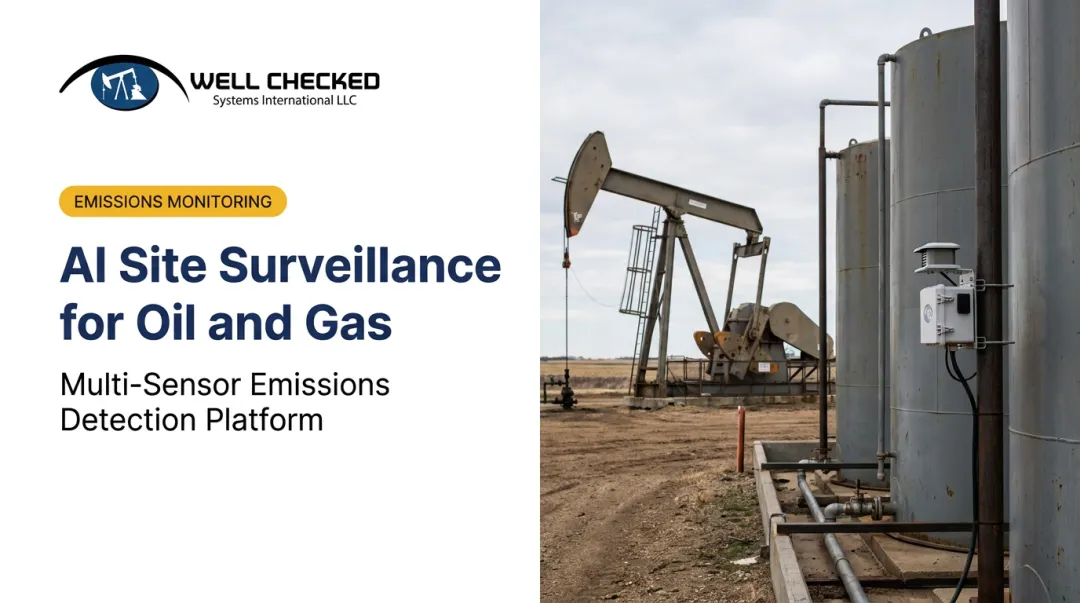
This approach combines video, OGI/LWIR imaging, and acoustic sensing into one autonomous platform, using AI to tell normal operations apart from genuine fugitive emissions. Instead of periodic snapshots, it watches continuously and filters noise before anything reaches a human.
Best suited for: Mid-sized to large operators managing multiple remote sites under EPA OOOOb, OGMP 2.0, or SASB/TCFD reporting pressure.
Well Checked Systems' Zensory.ai™ platform is one example of this model in practice. It's built across three tiers:
- Zentinal Ops™: visual and acoustic site intelligence, including 360° video coverage and object recognition
- Zentinal Core™: fuses video, LWIR/OGI, and acoustic streams to detect emissions and filter false alarms, alerting only on validated fugitive anomalies
- Zentinal IQ™: quantifies validated events for regulatory-defensible reporting aligned with EPA OOOOb and OGMP 2.0 Level 4/5
Each site goes through roughly a two-day AI Site Learning cycle, where the system establishes a normal operational baseline before it starts flagging exceptions. That baseline enables "operate by exception," sending crews out for validated events instead of routine drive-bys.
The platform is currently deployed across remote sites, including a confirmed program with a large Appalachian operator in the Appalachian Basin.

Limitations: Independent testing of continuous monitoring solutions shows why validation matters. A controlled study of 11 continuous-monitoring solutions found 90% detection probability ranged from 3 to 30 kg of methane per hour, with false-positive rates spanning 0% to 79% across products.
Upfront investment is also higher than single-point sensors, and accuracy improves after the initial site-learning period rather than on day one.
How to Choose the Right Leak Detection Method for Your Operation
The right mix depends on asset risk, site count, and compliance obligations—not on the newest tool on the market. Weigh these factors:
- Asset value and leak severity — high-consequence equipment justifies more coverage
- Number of remote sites — more sites mean route-based inspection costs climb fast
- Budget versus cost of missed leaks — route-based LDAR programs can run $1M to $5M+ annually for mid-sized to large operators, while autonomous monitoring keeps ongoing costs lower
- In-house expertise — can your team interpret OGI footage or acoustic anomalies reliably?
- Regulatory reporting needs — OOOOb, OGMP 2.0 Level 4/5, SASB, and TCFD all have different documentation requirements
- Scalability — will this method work across multiple basins as you grow?

Don't default to the most advanced technology if a simpler method covers your risk adequately. And don't overlook false-alarm rates: a system that floods your team with noise defeats the purpose of operating by exception.
Conclusion
Leak detection ties safety, environmental performance, and financial results together. Manual checks, optical imaging, acoustic sensing, and AI-driven multi-sensor monitoring each solve a different piece of the puzzle. The strongest 2026 programs don't pick one method — they layer several.
Operators who weigh those trade-offs can move from reactive leak response to continuous, defensible monitoring that stands up under EPA and state scrutiny.
Frequently Asked Questions
What is the average cost of oil and gas leak detection?
Costs vary by method and scale. Handheld sniffers and OGI cameras cost less upfront but need ongoing labor. Route-based manual inspections can run $1M–$5M+ annually for mid-sized to large operators, while continuous autonomous monitoring usually costs less over time.
Is it free to have an oil or gas leak checked?
Basic visual or smell checks are free. Professional inspections using OGI cameras, ultrasonic sensors, or fixed monitoring systems typically involve service or equipment costs.
How can I tell if there is an oil or gas leak?
Common signs include hissing sounds, a sulfur or rotten-egg odor, discolored or dead vegetation, bubbling in wet areas, and unexplained pressure drops. Odor warnings for hydrogen sulfide can fade over time, so smell alone isn't a reliable indicator.
Are there devices for oil and gas leak detection?
Yes. Categories include handheld electronic and ultrasonic detectors, OGI cameras, fixed point sensors, and multi-sensor AI monitoring systems like Zensory.ai™.
How often should leak detection equipment be inspected or calibrated?
Handheld instruments typically need daily pre-use calibration checks per manufacturer guidance. OGI cameras generally don't need routine calibration for gas detection but do need daily verification. Continuous AI systems use ongoing sensor health monitoring instead of fixed calibration intervals.
What is the most reliable leak detection method for oil and gas operations?
There's no single best method. Reliability improves when methods are combined. Continuous multi-sensor AI monitoring closes gaps left by periodic inspections by catching leaks between scheduled surveys.