
Operators face three pressures at once: physical security threats like theft and unauthorized access, worker safety obligations that don't pause for weekends, and tightening EPA and OGMP 2.0 methane reporting requirements that periodic inspections struggle to satisfy.
This guide breaks down what AI site surveillance actually is, where it delivers the most value, how the underlying sensor technology works, the business case behind it, and what to look for when evaluating a platform.
Key Takeaways
- AI surveillance fuses video, thermal, and acoustic equipment sensors for continuous, unmanned wellsite monitoring
- False-alarm filtering prevents the alert fatigue that causes teams to ignore or abandon monitoring platforms
- Continuous monitoring meets EPA methane rule and OGMP 2.0 reporting demands where periodic leak detection and repair (LDAR) falls short
- Swapping routine site visits for autonomous monitoring can cut costs while reducing field-travel safety exposure
What Is AI Site Surveillance for Oil & Gas?
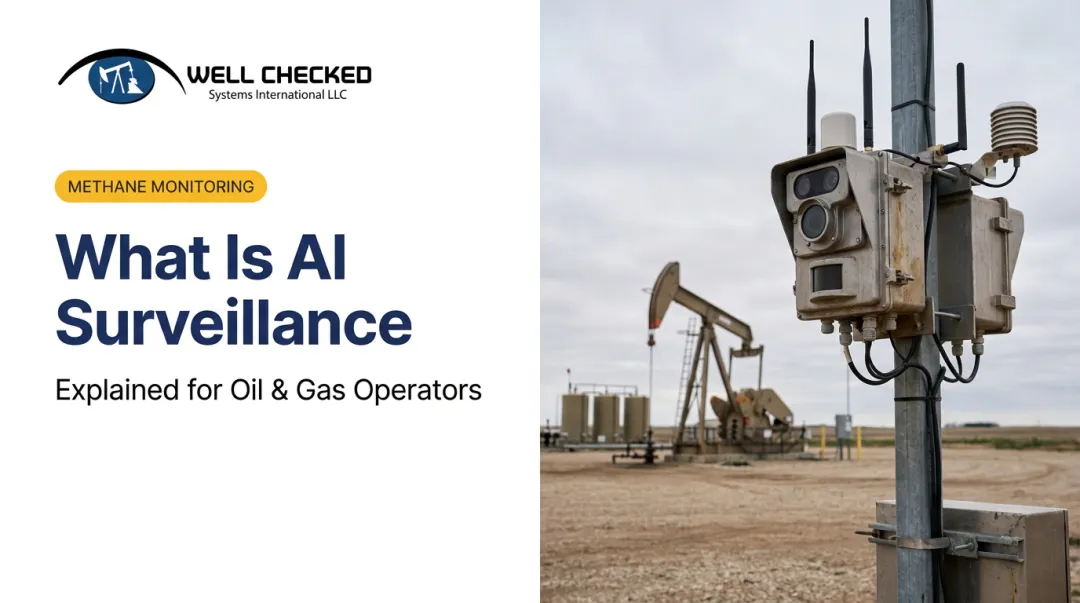
AI site surveillance combines computer vision, thermal and optical gas imaging, and acoustic anomaly AI to watch unmanned or semi-manned assets (wellpads, compressor stations, tank batteries) around the clock. No scheduled visit required. The system is always looking.
Compare that to how monitoring has worked for most of the industry's history: manned patrols, quarterly LDAR inspections, and pumper routes run on a fixed calendar. The real problem is the gap between visits, when nothing is watching.
A 2025 modeling study examining surveys of over 3,200 pieces of equipment - including tanks, flares, compressors, and separators - found that spending just five minutes per piece of equipment during quarterly inspections left 76% of intermittent emission sources undetected after a full year. Even longer, two-hour quarterly surveys, even as impracticable as that would be, detected roughly 48%. Intrusions and equipment failures follow the same pattern: whatever happens between visits goes unnoticed until someone happens to drive by.
From Constant Patrol to Operating by Exception
This is where the "operate by exception" model comes in. Instead of humans patrolling constantly or reviewing hours of footage, AI systems like Well Checked Systems' Zensory.ai™ platform handle first-line detection continuously and escalate only validated events. Nothing wrong at a site today? Nobody needs to drive out there. Field time gets reserved for confirmed problems, not routine checks that usually find nothing.

Core Use Cases of AI Surveillance in Oil & Gas Operations
Perimeter Security & Intrusion Detection
AI video analytics scan for unauthorized personnel, vehicles, drones, or unusual activity near wellpads and tank batteries, triggering alerts in real time rather than waiting for someone to review footage days later.
This matters because oilfield security has become a genuine business problem. The global oil and gas security market was valued at $26.4 billion in 2023 and is projected to reach $38.3 billion by 2030, growing at a 5.5% annual clip.
That growth reflects a simple reality: theft, vandalism, and unauthorized site access aren't shrinking problems for operators managing widely dispersed assets.
Worker Safety & Regulatory Compliance Monitoring
Cameras can flag PPE gaps, restricted "red zone" entries, and unsafe proximity to hazardous equipment, then notify supervisors immediately instead of waiting for a periodic audit.
Field conditions make this valuable. Extreme weather and hazardous processes create risks that shift by the hour, not the quarter.
Across the industry, contact with equipment and slips, trips, and falls remain among the most common causes of severe injuries on upstream sites, precisely the categories a well-tuned camera network is positioned to catch before they become incidents.
Methane & Fugitive Emissions Detection
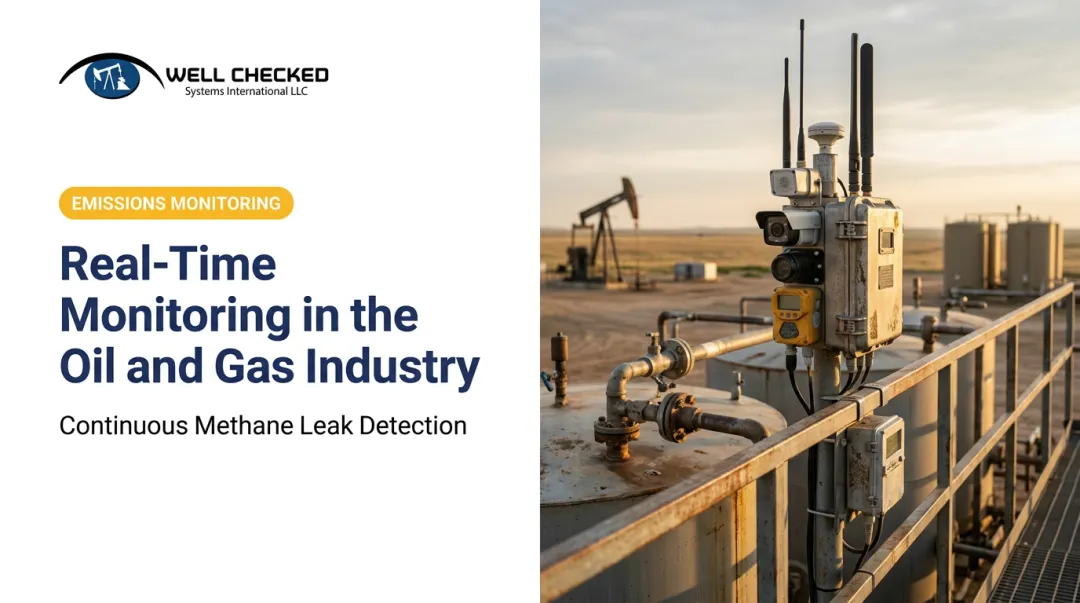
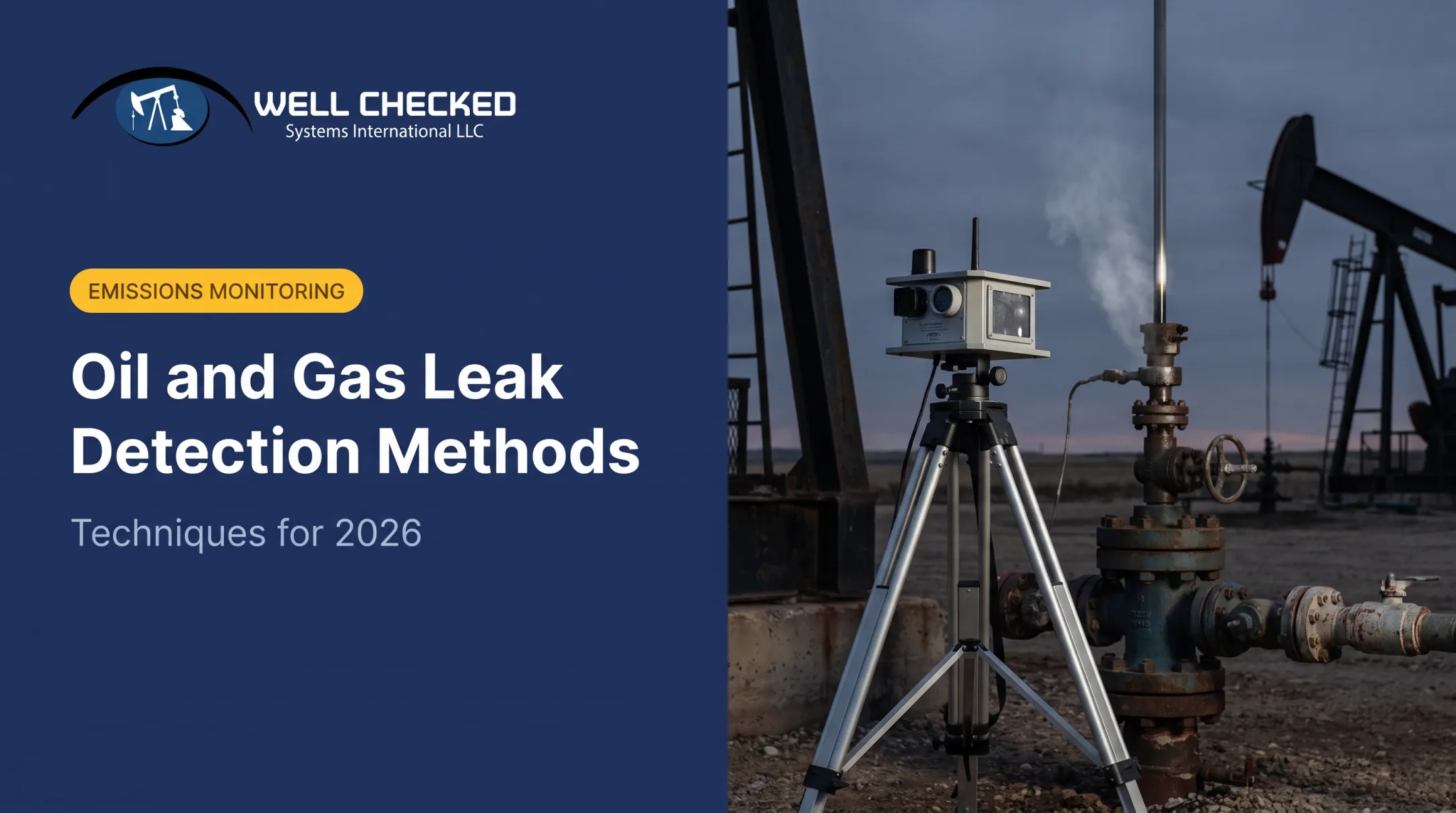
Combining Long-Wave Infrared Optical Gas Imaging with acoustic abnormal-sound detection enables day-and-night detection of leaks invisible to the human eye. As the detection-gap data above shows, those same leaks are largely invisible to quarterly LDAR surveys too.
Well Checked's Zensory.ai™ platform approaches this through a short AI "site learning" cycle. During installation, the system spends roughly two days observing a site's normal process emissions, equipment sounds, and visual patterns.
Once that baseline is set, Zentinal Core™ can tell the difference between routine venting and a genuine fugitive leak (described internally as finding "the needle in stacks of needles"), so operators aren't flooded with alerts that don't require action.
Equipment & Asset Health Monitoring
Thermal and visual monitoring can catch early signs of corrosion, overheating, or mechanical trouble before they turn into failures or lost production.
The financial stakes are real. AMPP cites a historical NACE estimate of $1.372 billion in annual direct corrosion costs across U.S. oil and gas exploration and production, split between surface pipelines, downhole tubing, and corrosion-related capital spending.
That figure dates to a 2002 study, but the underlying lesson holds: catching a problem early is far cheaper than replacing failed equipment.
On the acoustic side, Zensory.ai™ applies the same baseline-learning approach used for emissions to equipment sound signatures, flagging abnormal noise patterns that often precede mechanical failure and feeding those alerts into predictive maintenance workflows.

How AI Site Surveillance Technology Works
Modern platforms typically layer three types of sensing, plus a computing approach built for remote environments.
Sight. High-resolution cameras with AI object detection identify people, vehicles, and equipment states across the site, providing continuous visual coverage without a human reviewing every frame.
Sound. Acoustic anomaly AI models pick up on abnormal sounds, such as irregular compressor noise or unexpected venting, that cameras alone would miss but that often signal a developing issue.
Gas imaging. Long-Wave Infrared (LWIR) optical gas imaging cameras visualize methane and volatile organic compound (VOC) leaks in daylight or darkness. LWIR technology also tends to run at roughly a third of the cost of traditional mid-wave IR systems, making broader deployment across a multi-site portfolio more financially realistic.
Why Edge Computing Matters at Remote Sites
None of this works if the system depends on constant connectivity, and many wellsites simply don't have it. Onsite edge computing processes video and sensor data locally, so detection continues uninterrupted even when cellular or satellite links drop.
Data is stored on-site and automatically synced once connectivity returns, meaning nothing gets lost during an outage.
Separating Detection from Defensible Data
Well Checked's architecture illustrates a distinction worth understanding when evaluating any platform: detection and quantification are different problems. Zentinal Core™ handles detection and false-alarm filtering, deciding whether something real is happening.
Only after Core validates an event does Zentinal IQ™ activate, quantifying emissions volume, duration, and rate using LWIR-based plume analysis. That sequencing keeps false positives out of the regulatory reporting pipeline entirely, which matters when the output feeds compliance submissions.
Business Case: Cost Savings, Compliance, and ROI
The financial argument for autonomous monitoring starts with what traditional route-based visits actually cost.
- Mid-sized to large operators can spend $1 million to $5 million or more annually on route-based pumper visits, a cost structure autonomous monitoring is built to reduce
- Fewer scheduled drives also mean fewer vehicle miles, less carbon output, and reduced personnel exposure to traffic accidents and adverse weather
- Continuous monitoring data supports EPA methane rule (40 CFR Part 60 Subpart OOOOb) alternative-monitoring pathways and OGMP 2.0 Level 4/5, SASB, and TCFD reporting, frameworks that periodic, snapshot-based LDAR reports simply weren't built to satisfy
The Acknowledge-Dispatch-Mitigate Model
Speed matters once an event is confirmed. Well Checked's response framework (acknowledge, dispatch, mitigate) moves a validated methane event from alert to resolution within 24 hours. As one Director of Operations puts it:
"If all our sites are continuously monitored, when a fugitive gas event occurs, which it will, we are proactively alerted and our team can acknowledge, dispatch, then mitigate within 24 hours."
That response window is aimed at supporting a documented, timely response to methane survey events.
Production-Scale Proof
That kind of response speed only matters if it holds up at scale. Well Checked currently monitors remote wellsites across the Appalachian, Permian, Anadarko, Bakken, Eagle Ford, and Denver-Julesburg basins, including continuous monitoring in the Appalachian Basin, processing over 1,500 videos per site every day. That volume shows multi-sensor AI surveillance holds up not just in a pilot, but across a large, multi-site operator portfolio.

Choosing the Right AI Surveillance Solution
Not every AI surveillance platform earns its keep. A few evaluation criteria separate the ones operators actually keep using from the ones that end up ignored.
- False-alarm performance first. If a platform can't reliably tell true anomalies from normal operational noise, teams either drown in alerts or start tuning them out — defeating the entire purpose of operating by exception.
- Multi-sensor over stitched-together point solutions. Combined video, acoustic, and gas-imaging in one platform avoids the added cost and integration headaches of managing separate vendors for each sensor type.
- Scalability across basins. The platform should integrate with existing SCADA systems and scale cleanly across multiple basins, a must for producers standardizing continuous monitoring across a diverse portfolio rather than running different tools site by site.
Well Checked Systems designed Zensory.ai around this checklist, using Zentinal Core™ to filter false alarms before they reach field teams.
Frequently Asked Questions
How is AI used in security surveillance?
AI analyzes live video, thermal, and acoustic feeds in real time to detect intrusions, anomalies, and safety violations. It sends alerts only on validated events, rather than requiring someone to watch every feed constantly.
What types of sensors are used in AI oil and gas site surveillance?
Platforms typically combine high-resolution video cameras, Long-Wave Infrared optical gas imaging cameras, and acoustic equipment sensors. Together, these cover visual, gas-leak, and sound-based detection across a site.
Can AI surveillance help with EPA methane compliance?
Continuous AI monitoring data can support EPA methane rule alternative-monitoring pathways and OGMP 2.0 measurement-based reporting where recognized by the applicable state plan. It doesn't automatically establish compliance on its own, but it strengthens the evidentiary record.
How does AI reduce false alarms in oil and gas monitoring?
Systems like Zensory.ai complete an initial learning period, typically just a couple of days per site, to understand normal patterns like routine venting and equipment sounds. Once that baseline exists, the AI flags genuine deviations instead of treating every signal as suspicious.
What is the ROI of AI site surveillance for oil and gas operators?
ROI comes from three places: reduced spending on route-based site visits, faster response that limits EPA fine exposure, and lower safety and environmental risk from field travel. For operators spending $1M–$5M+ annually on pumper routes, the savings potential is significant.
Is AI surveillance reliable at remote sites without internet connectivity?
Yes. Onsite edge computing processes and stores data locally, so detection continues even when connectivity is limited or drops entirely. Data syncs automatically once a connection is restored.