
Both are right. That confusion, though, is exactly why so many teams end up choosing the wrong monitoring solution for their needs.
The common thread: businesses need continuous visibility into distributed systems, whether that's servers, applications, or physical remote sites, without relying on manual, on-site checks. In fact, 62% of technology professionals say a high-impact outage costs their organization at least $1 million per hour, according to New Relic's 2024 Observability Forecast Report. That's the cost of not knowing something's wrong in real time.
This guide covers the definition, core components, types, benefits, and a real-world industrial example to help you pick the right approach.
Key Takeaways
- Cloud-based monitoring runs on three functional layers: data collection, analysis, and alerting
- Cloud-based monitoring replaces periodic manual checks with always-on, remote data streams
- Agent-based and agentless monitoring solve different problems, not competing ones
- Edge computing matters when connectivity is unreliable, as with remote industrial sites
- Zensory.ai™ applies this same three-layer model to physical wellsites, not just IT infrastructure
What Is Cloud-Based Monitoring?
Cloud-based monitoring is the practice of using cloud-hosted software and infrastructure to continuously observe, collect data from, and manage the performance, health, or status of remote systems, assets, or environments in real time.
Microsoft describes its Azure Monitor service as a platform for "collecting, analyzing, and acting on telemetry" across cloud and hybrid environments. Amazon CloudWatch monitors AWS resources and applications in real time in a similar way.
Sensors, agents, or APIs capture this data and transmit it to the cloud. From there, the platform processes and visualizes it so teams can act from anywhere with a screen and a login.
"cloud-hosted" doesn't mean every monitored asset lives in the cloud. Azure Arc and the CloudWatch agent both extend monitoring to on-premises servers and hybrid environments, proving the model works well beyond pure cloud infrastructure.
Cloud-Based Monitoring vs. Traditional On-Site Monitoring
Traditional monitoring depends on people. A technician drives to a site, inspects equipment, logs a reading, and drives to the next one. That approach only captures a snapshot in time.
Cloud-based monitoring adds a continuous data stream between inspection rounds:
| Approach | Characteristics |
|---|---|
| Traditional | Periodic, manual, dependent on staff availability and travel schedules |
| Cloud-based | Always-on, remote, automated, viewable the moment an event occurs |

The gap between inspection cycles is where problems hide. Cloud monitoring closes that gap.
Agent vs. Agentless Monitoring
Not all cloud monitoring collects data the same way.
- Agent-based monitoring installs software directly on the device, like Datadog's Agent, for deep visibility into the OS and running processes.
- Agentless monitoring pulls data through APIs or cloud integrations, trading OS-level detail for faster, lighter-weight coverage.
Neither approach is universally better. The right choice depends on how much detail you need versus how much you want to install and maintain.
The Three Core Components of Cloud Monitoring
Strip away the vendor branding, and nearly every cloud monitoring system, whether it's watching servers or wellheads, runs on the same three functional layers: data collection, analysis and correlation, and alerting and response.
Data Collection
Sensors, agents, or APIs continuously gather metrics, logs, images, or other signals from the monitored environment. This could mean CPU usage on a server, page-load times on a website, or methane readings at a remote wellsite. The collection layer is the foundation; everything downstream depends on its accuracy and frequency.
Data Analysis & Correlation
Raw data alone isn't useful. Cloud platforms process incoming data, often using AI or machine learning, to detect patterns, anomalies, or threshold breaches. This is also where noise gets filtered from genuine issues. Azure's Log Analytics and CloudWatch's Logs Insights both exist specifically to make sense of high-volume telemetry rather than dumping it on a dashboard unfiltered.
Alerting & Response
Once an event is validated, it triggers a notification, dashboard update, or automated workflow. CloudWatch alarms, for instance, evaluate thresholds and notify through services like SNS, or kick off scaling actions automatically. Teams can then act quickly instead of hunting for problems buried in logs. Well Checked Systems applies this same logic on remote wellsites: its Zentinal Core™ platform validates an event as a genuine fugitive emission before alerting field crews, so teams chase real leaks instead of false alarms.
The three-layer framework holds whether the "system" is a fleet of servers, a customer-facing website, or a physical remote industrial site. That consistency is what makes the model worth understanding before you shop for a vendor.
Types of Cloud-Based Monitoring
Cloud monitoring isn't one product category. It spans several distinct use cases:
- Infrastructure/server monitoring – tracks hosts and containers to keep servers running
- Application performance monitoring (APM) – gathers telemetry to detect and resolve app performance issues before users notice
- Database monitoring – examines query performance, explain plans, blocking activity, and lock contention
- Network monitoring – uses flow and traffic data to expose dependencies and bottlenecks
- Website/end-user experience monitoring – covers uptime and page speed via synthetic testing and real-user browser session data

There's a lesser-discussed category, too: industrial and IoT/remote-asset monitoring. Here, cloud platforms track physical equipment, emissions, or environmental conditions instead of digital infrastructure alone.
The architecture is the same: sensors, edge processing, and cloud dashboards, just applied to a wellsite instead of a web server. That shift lets operators monitor methane leaks or equipment failures as rigorously as IT teams monitor server uptime.
Key Benefits of Cloud-Based Monitoring
Scalability and Cost
Organizations avoid building and maintaining their own monitoring hardware. Subscription-based pricing scales with actual usage instead of requiring large upfront capital spend, which matters whether an organization is monitoring 10 servers or 200 wellsites.
Accessibility and Speed-to-Insight
Teams view dashboards and receive alerts from any device, anywhere. That accessibility directly improves response time. Forrester's Total Economic Impact study of Elastic Observability found a composite organization reduced total downtime by 52% in Year 1, 60% in Year 2, and 68% in Year 3. That's a modeled outcome from a commissioned customer study, not a universal guarantee, but the trend direction holds up in practice.
Risk Reduction
Continuous, automated monitoring catches security, performance, safety, or compliance problems before they escalate. That reduces reliance on manual, periodic checks where issues can go undetected for weeks between inspections.
Real-World Example: Cloud-Based Monitoring for Remote Industrial Operations
Cloud monitoring isn't limited to servers and apps. It also secures physical, remote environments like industrial facilities, and oil and gas offers one of the clearest examples.
Remote wellsites have traditionally relied on "pumper routes," where field staff drive between sites on a set schedule to check equipment manually. A JPT/SPE article on remote well monitoring notes that many of these visits happen without a clear operational need, adding travel time and exposure without necessarily catching problems any faster. Each visit only captures a snapshot; leaks or malfunctions between visits go unnoticed.
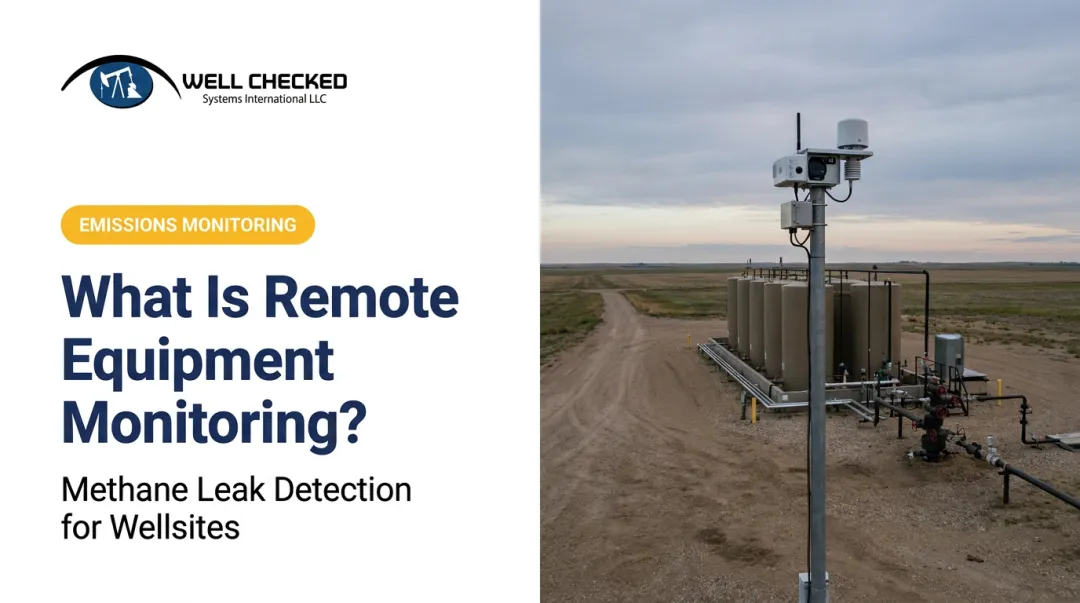
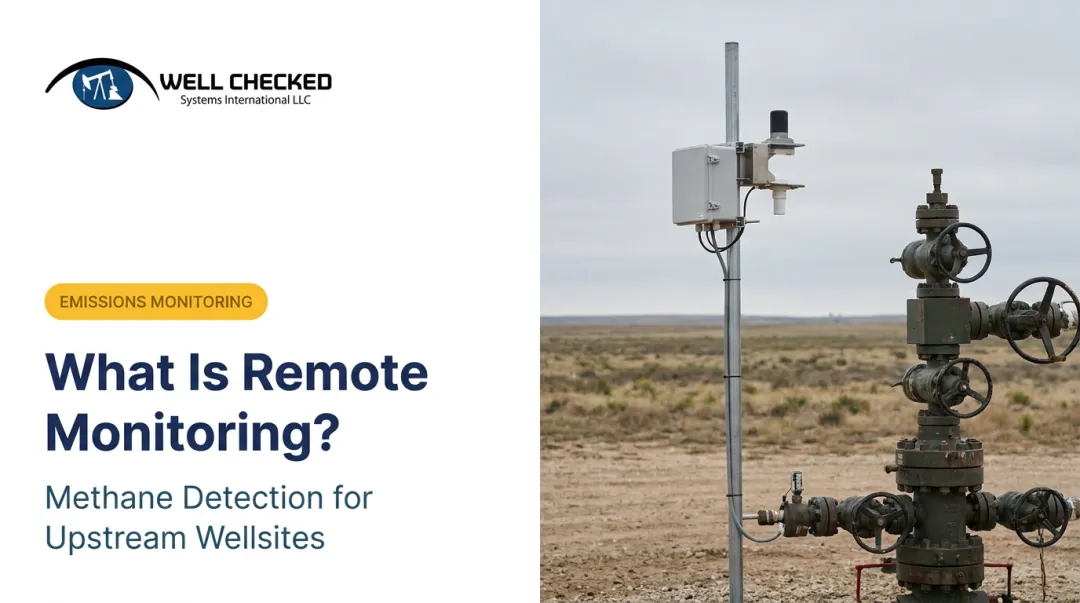
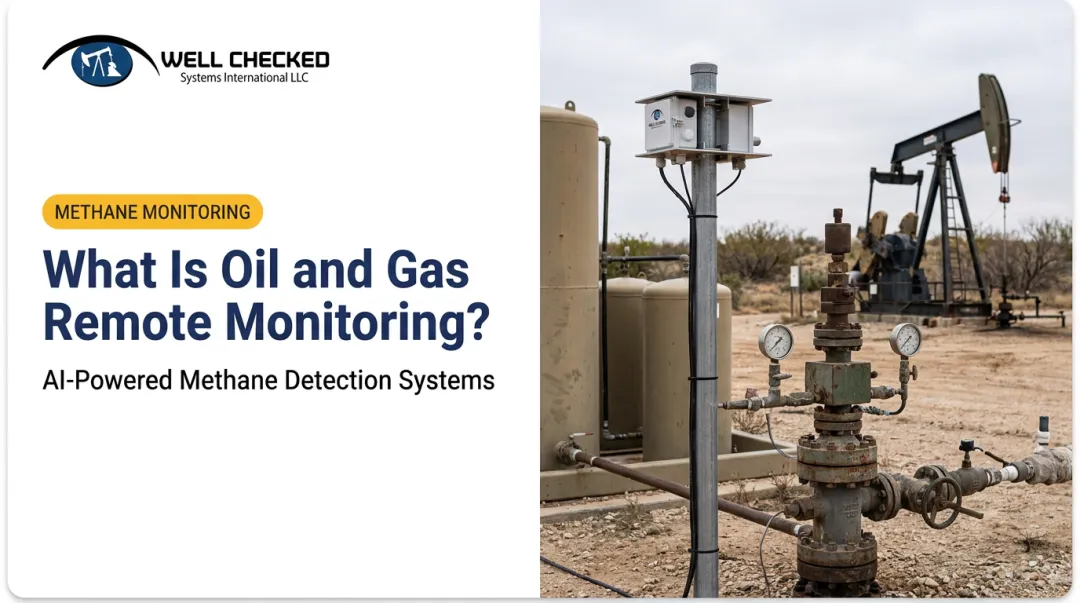
Well Checked Systems built its Zensory.ai™ platform around solving exactly this gap. The system combines three sensor types, video, Long-Wave Infrared Optical Gas Imaging, and acoustic abnormal-sound detection. Onsite edge computing operates independently of connectivity, then syncs validated data to the cloud once a connection is available.
How the Architecture Maps to the Three-Layer Model
Zensory.ai™'s three-tier structure is a practical illustration of the data collection, analysis, and alerting framework:
- Zentinal Ops™ delivers visual and acoustic equipment intelligence: high-resolution video, object recognition, acoustic anomaly detection, and actionable alerts. Well Checked has a USPTO provisional patent filing covering its acoustic anomaly detection technology.
- Zentinal Core™ handles multi-sensor detection and data collection, analyzing 1,500+ videos per site per day and filtering false alarms using an AI baseline learned over roughly two days per site
- Zentinal IQ™ activates only after Core validates an event, then quantifies volume, duration, and rate for regulatory-defensible reporting aligned with EPA Subpart OOOOb, OGMP 2.0, SASB, and TCFD

The result: continuous monitoring across remote wellsites, including a multi-site deployment in the Appalachian Basin, replacing route-based inspections with 24/7 visibility. Well Checked cites route-based visit programs costing operators $1 million to $5 million or more annually, plus the safety risk of unnecessary travel. Continuous monitoring is designed to reduce both costs.
How to Choose the Right Cloud Monitoring Approach
Before selecting a platform, work through three questions:
- Does your environment need pure IT monitoring, or does it extend to physical assets? Servers and applications need different sensors and data pipelines than industrial equipment. Confirm the vendor's platform actually fits your asset type.
- How does the solution perform where connectivity is limited? Look for edge computing capability rather than pure cloud dependency. Systems built for the field, like Well Checked Systems' Zensory.ai™ platform, process data onsite so monitoring keeps running even when a wellsite's connection drops.
- Does it filter noise, or just flood you with data? Prioritize platforms, such as Zentinal Core™, that alert only on validated anomalies rather than every reading. Whether you're managing servers or wellsites, a barrage of false positives defeats the purpose of automated monitoring.
Getting these three questions right up front saves months of frustration later.
Frequently Asked Questions
What is cloud-based monitoring?
Cloud-based monitoring uses cloud-hosted tools to continuously track the performance, health, or status of remote systems in real time. Sensors and APIs feed that data into the cloud for processing and alerting.
What is an example of a cloud-based system?
Examples span IT platforms like AWS CloudWatch and Datadog, and industrial platforms like Zensory.ai™, a multi-sensor wellsite monitoring system. Both rely on cloud infrastructure for remote visibility, just applied to different environments.
What are the three parts of cloud monitoring?
Data collection, analysis and correlation, and alerting and response. Sensors or agents gather data, the platform processes it for patterns or anomalies, then validated events trigger notifications or automated workflows.
How does cloud-based monitoring differ from traditional on-premises monitoring?
Traditional monitoring relies on manual, periodic, on-site checks that only capture snapshots in time. Cloud-based monitoring provides continuous, remote, automated oversight without requiring someone physically present.
Can cloud-based monitoring work at remote sites with limited internet connectivity?
Yes. Edge computing allows data processing to happen on-site, independent of connectivity, with validated data syncing to the cloud once a connection is available. This prevents monitoring gaps at hard-to-reach locations.
Is cloud monitoring the same as cloud observability?
Not quite. Monitoring tracks predefined metrics and thresholds with set alerts, while observability provides deeper, exploratory insight into why an issue occurred in the first place.