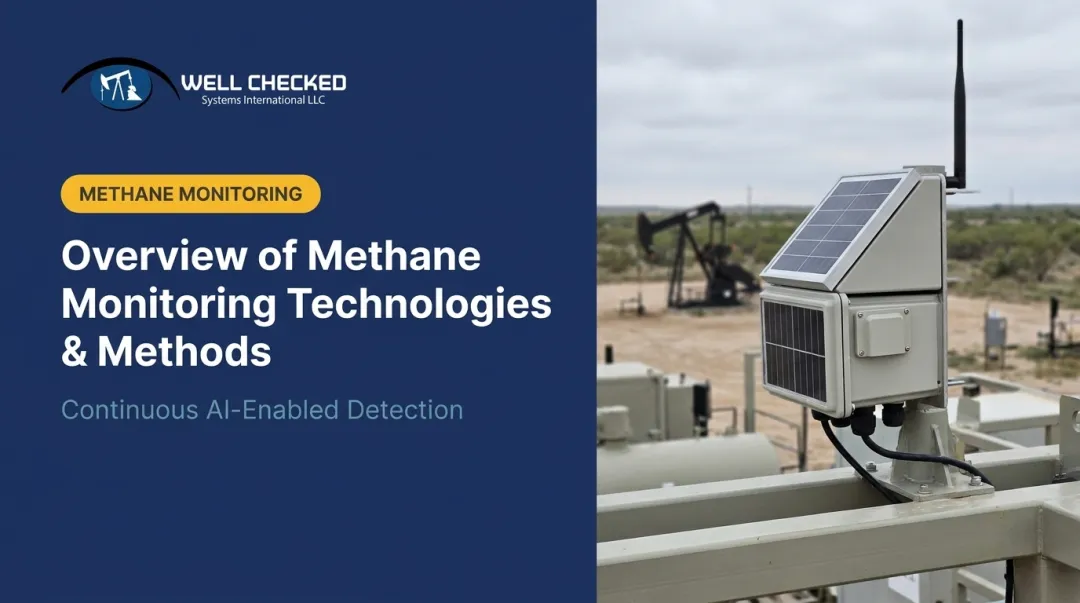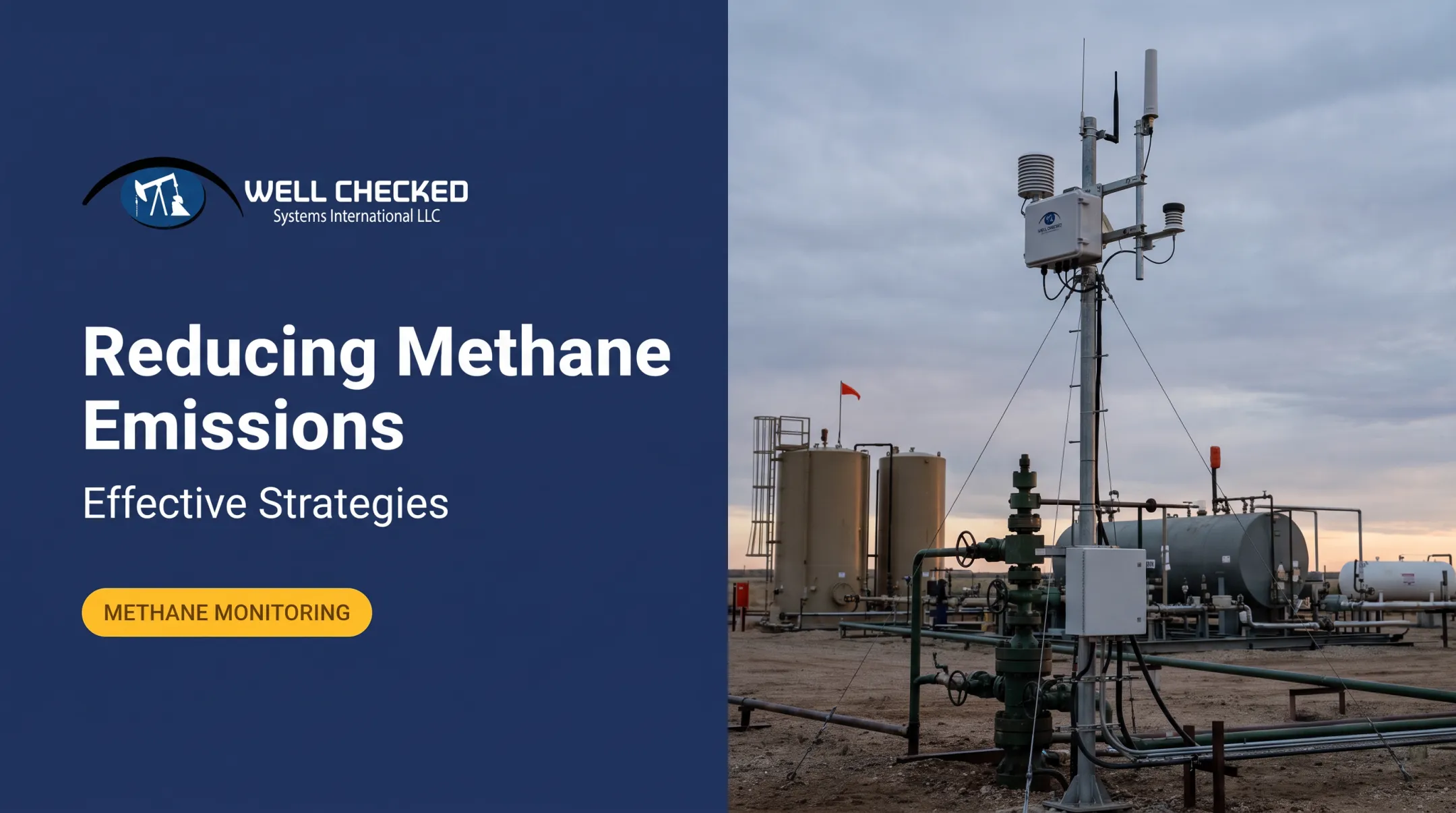

Capture technology has come a long way from clipboard-and-camera leak inspections. Today's systems use AI, infrared cameras, and acoustic sensors to catch leaks continuously, not just once a quarter. That shift is creating real economic value alongside emissions reductions.
This article breaks down how methane capture actually works, where it's being deployed across US industries, the technologies driving results, and the real barriers still slowing adoption.
Key Takeaways
- Methane capture cuts emissions while unlocking revenue and compliance value across oil & gas, dairy, and waste sectors
- The EPA methane rule (40 CFR Part 60 Subpart OOOOb) is pushing operators toward continuous monitoring
- High upfront costs and low-concentration detection limits remain real technical barriers
- AI-enabled multi-sensor platforms are closing the gap between detection and regulatory-defensible reporting
Understanding Methane Capture Technology
Methane capture means collecting fugitive or vented methane before it escapes into the atmosphere. That's different from atmospheric methane removal, which pulls methane out of the air after it's already dispersed. Capture happens at the source.
Approaches fall into two broad categories:
- Mechanical systems: vapor recovery units, anaerobic digesters, gas collection wells
- Digital systems: AI-based leak detection, quantification, and continuous monitoring platforms
Why Captured Methane Is Worth Recovering
Methane is the principal component of natural gas, so gas that vents or leaks is product that was produced but never sold. Capturing it converts a loss into saleable volume while reducing the reportable emissions an operator must account for under EPA Subpart
OOOOb and OGMP 2.0. Operators can treat capture as a near-term operational and revenue lever.
Where Methane Capture Happens Across US Industries
Methane capture concentrates in three US sectors, each with distinct sources and recovery methods:
- Oil & gas: LDAR programs, vapor recovery units, and gas reinjection capture fugitive leaks from wellheads, compressors, and pipelines.
- Agriculture: Dairy digesters seal manure lagoons and capture biogas from decomposition. EPA counted 400 manure-based anaerobic digestion systems nationwide as of June 2024, including 343 dairy systems.
- Landfills: Collection wells and flares capture methane from decomposing waste, roughly 14% of US methane emissions. Landfill gas runs about 50% methane and 50% CO2, per EPA's landfill gas overview.

Across all three sectors, operators are shifting from periodic inspection to continuous, technology-driven monitoring.
Core Methane Capture Technologies Driving Emissions Reduction
Methane capture in the US rests on three linked capabilities: finding leaks fast, recovering gas that would otherwise vent, and proving reductions with defensible data. Most operators stack more than one of the methods below to meet Subpart OOOOb duties and cut product loss.
Leak Detection, Imaging, and Acoustic Sensing
Traditional LDAR still depends on quarterly or semiannual walkthroughs with handheld detectors. Under Subpart OOOOb, operators must attempt repairs within 30 days of a detected leak. A leak that starts on day two of a 90-day cycle can still run for weeks before anyone walks the site.
Continuous sensing closes that gap. Long-Wave Infrared (LWIR) cameras detect methane plumes day or night. Well Checked Systems cites LWIR cameras at approximately one-third the cost of traditional mid-wave IR systems, which makes continuous optical gas imaging more practical to run at scale.
Acoustic sensors add an earlier signal. They pick up the signature of pressurized gas escaping equipment—often before a camera sees a plume—and are especially useful on compressors, where mechanical noise masks visual cues.
Vapor Recovery and Biogas Capture
Vapor recovery units (VRUs) pull low-pressure vapor from storage tanks and route it to sales lines, compressor suction, or onsite fuel. EPA notes these units can capture tank vapor roughly 95% of the time when properly maintained.
Outside the well pad, dairy digesters seal manure lagoons and send captured biogas—typically 50–75% methane—to electricity, heat, or pipeline-quality renewable natural gas (RNG). EPA's AgSTAR program reports 14.8 million metric tons of CO2-equivalent reductions from these systems in 2023 alone.
AI-Enabled Multi-Sensor Platforms
Standalone sensors still leave operators sorting noise from real events. Multi-sensor platforms fuse video, acoustics, and OGI so teams work by exception instead of chasing every alert. Well Checked Systems' Zensory.ai™ stack uses three tiers:
- Zentinal Ops™ – high-resolution video and acoustic monitoring with 360° site coverage
- Zentinal Core™ – fuses video, acoustic, and LWIR OGI data, filtering false alarms after a roughly 2-day AI Site Learning cycle that sets each site's normal baseline
- Zentinal IQ™ – quantifies only Core-validated events and produces EPA-format compliance logs plus OGMP 2.0 Level 4/5 reporting
The platform processes 1,500+ videos per site per day across remote monitored sites, including a confirmed deployment with a large Appalachian operator in the Appalachian Basin.

Benefits of Methane Capture Technology for US Operators
For US operators, methane capture and the monitoring that proves it pay off in emissions, revenue, compliance, safety, and how crews run the field.
Environmental impact. AgSTAR-tracked digesters cut 13.8 MMTCO2e of direct methane emissions in 2023 and generated about 3.29 million MWh of energy equivalent. The same principle matters upstream: gas kept in the system is methane that never reaches the atmosphere.
Economic value. Captured methane can be sold or used on site, so abatement shows up as product value—not only as avoided emissions. Mid-sized to large operators also spend $1 million to $5 million-plus annually on route-based site visits. Autonomous, operate-by-exception monitoring cuts reliance on those routine trips and the labor behind them.

Regulatory compliance. Continuous, defensible data maps to frameworks operators already face:
- EPA's Subpart OOOOb alternative-monitoring pathway
- OGMP 2.0 Level 4/5 measurement-based reporting
Safety. Fewer pumper-route miles mean less exposure to traffic, severe weather, and hazardous site conditions for field crews.
Operational efficiency. Operate-by-exception replaces fixed drive-out schedules. Teams respond when the system flags a validated anomaly, with near-real-time alerts by dashboard, email, text, or SCADA API—so wrench time goes to real events, not empty check-ins.
Challenges and Barriers to Scaling Methane Capture
Progress is real, but scaling methane capture across US operations isn't simple. Four barriers keep coming up:
- High capital costs. Digesters, VRUs, and sensor networks all require significant upfront investment. Smaller operators often can't absorb that cost without financing or incentive programs.
- Technical limitations at low concentrations. Detecting methane near atmospheric background (around 2 ppm) is far harder than spotting a concentrated plume at a wellhead. EPA Method 21 sets no single universal ppm threshold—results depend on instrument settings and site conditions.
- Data and monitoring gaps. False alarms erode trust in monitoring systems. OGMP 2.0 Level 5 requires reconciling source-level estimates with independent site measurements, and many operators still lack the tools to do that.
- Policy fragmentation. California requires quarterly LDAR surveys, while Colorado is phasing out gas-driven pneumatic devices through 2029. operators face a patchwork of rules instead of one national standard.

Frequently Asked Questions
Is methane capture a thing?
Yes. It's an established practice across oil & gas, agriculture, and waste sectors, using tools like anaerobic digesters, vapor recovery units, and continuous monitoring technology to collect methane before it reaches the atmosphere.
What is the most promising carbon capture technology?
Carbon capture targets CO2, not methane. The Department of Energy points to direct air capture and point-source capture as the leading CO2-focused technologies, distinct from methane-specific LDAR and recovery systems.
How is methane obtained?
Methane comes from natural gas extraction, biogas production at digesters and landfills, and captured fugitive emissions from oil & gas facilities and waste sites.
What is the biggest source of methane in the world?
Globally, fossil fuel production, agriculture (particularly enteric fermentation in livestock), and waste management are the largest anthropogenic sources, per the IEA's Global Methane Tracker.
How toxic is methane to humans?
Methane isn't toxic, but it displaces oxygen in enclosed spaces and creates asphyxiation risk. It's also flammable between 5-15% concentration in air, so early detection is critical for worker safety.