
That growth comes with confusion. Many businesses use "monitoring" and "surveillance" interchangeably, and that mix-up leads to real problems: security gaps, wasted budget, and systems that record everything but alert on nothing.
This guide breaks down what each term actually means, the main types of monitoring and security systems available, how AI and IoT are reshaping the landscape, and how to choose a setup that fits your site instead of a generic template.
Key Takeaways
- Monitoring drives real-time alerts and operational integrity; surveillance emphasizes recording and deterrence
- Businesses typically deploy five monitoring types and four security system categories, often layered together
- AI-enabled, multi-sensor platforms now allow reliable oversight of remote sites without on-site staff
- The right setup depends on scale, environment, budget, and whether you need evidence, alerts, or both
Monitoring vs. Surveillance: Understanding the Core Difference
These two terms get used as synonyms constantly, but they solve different problems. Confusing them is how businesses end up with cameras that record incidents nobody notices until it's too late.
What Is Monitoring?
Monitoring is continuous observation of a system or environment, built around real-time alerts and immediate response. In oil & gas operations, this looks like acoustic equipment sensors flagging an abnormal compressor sound or infrared gas imaging catching a methane leak the instant it starts. Well Checked has a USPTO provisional patent filing covering its acoustic anomaly detection technology.
The National Institute of Standards and Technology describes remote monitoring as sensor measurement made available over a network, and the priority isn't recording history. It's catching a leak, a pressure drop, or a failed valve the moment it happens, not reviewing footage of it days later. That immediacy is what separates monitoring from surveillance, which picks up the story after something has already happened.
What Is Surveillance?
Surveillance uses cameras and recording devices to observe and document activity at a location. Its two jobs are deterrence, making a would-be trespasser think twice before climbing a wellsite fence, and evidence-gathering, giving investigators footage to review after equipment theft or vandalism occurs.
A surveillance system can include live monitoring, but its core function is capturing footage, not triggering an alarm. On a remote wellsite, that means recorded video sits in wait: useful for building a case after a break-in, but not built to catch the moment a valve fails or a leak starts.
Key Differences Between the Two
| Factor | Monitoring | Surveillance |
|---|---|---|
| Primary purpose | Real-time alerting, operational integrity | Deterrence and evidence collection |
| Core technology | Sensors, alarms, connected devices | Cameras, recorders, video management |
| Response timing | Proactive, immediate | Often after-the-fact |
Most modern systems blend both. A remote wellsite might pair gas-imaging sensors (catching a fugitive methane leak or a stuck valve instantly) with cameras that record footage for later review or after-hours security. Neither function alone closes the full gap. Together, they cover the moment something goes wrong and the record needed to prove what happened.

The 5 Types of Monitoring Systems Businesses Use Today
Monitoring extends well past security. It covers physical, environmental, and operational needs across five main categories.
Security & Intrusion Monitoring
Alarm-based systems detect unauthorized access, break-ins, and perimeter breaches, sending real-time alerts to a central monitoring station. Door contacts, motion sensors, and glass-break detectors fall into this category, and industry frameworks like ANSI/TMA's alarm validation standard define what counts as a legitimate alarm event.
Environmental Monitoring
This covers fire, flooding, temperature swings, humidity, and gas or air-quality threats. Fire alarm systems built to NFPA 72 requirements, for example, continuously supervise sprinkler valves and waterflow through a monitored control unit. Facilities and industrial sites rely on this layer to protect both assets and people.
Video/Visual Monitoring
Camera-based systems provide live visual oversight of a location, frequently paired with motion detection to flag activity worth a closer look. This is the layer most people picture when they hear "monitoring," even though it's just one of five.
Operational/Process Monitoring
Industrial and commercial operations use this to track equipment performance, throughput, and process anomalies. NIST cites examples like turbine-bearing vibration checks and chemical-plant temperature monitoring, catching inefficiencies or malfunctions before they escalate into costly downtime.
Remote/IoT-Based Monitoring
Connected sensors and edge devices let businesses monitor locations without requiring anyone on-site. For facilities spread across large geographic areas, whether that's a chain of retail stores or hundreds of oil and gas wellsites, this is often the only practical way to maintain consistent oversight.
The 4 Types of Security Systems for Comprehensive Protection
Security systems generally fall into four categories. Most businesses combine at least two for layered protection rather than relying on a single point solution.
Video Surveillance (CCTV/IP Camera) Systems
DVR- and NVR-based CCTV, along with IP cameras, record footage and increasingly analyze it in real time using AI for object and face detection. Camera-based oversight remains the starting point for most physical security programs, but raw footage alone can't tell routine activity from a genuine threat without added analytics layered on top.
Access Control Systems
Keycards, biometric scanners, and credential-based systems restrict physical entry to authorized personnel. For remote industrial sites, access control extends beyond office doors to wellheads, valve rooms, and equipment enclosures, where unauthorized entry carries both safety and environmental risk.
Alarm and Intrusion Detection Systems
Motion sensors, door and window contacts, and glass-break detectors trigger real-time alerts the moment unauthorized entry occurs. Many organizations use these sensors specifically to detect access-control breaches, layering intrusion detection on top of credential systems rather than relying on either alone.
Integrated/Smart Security Systems
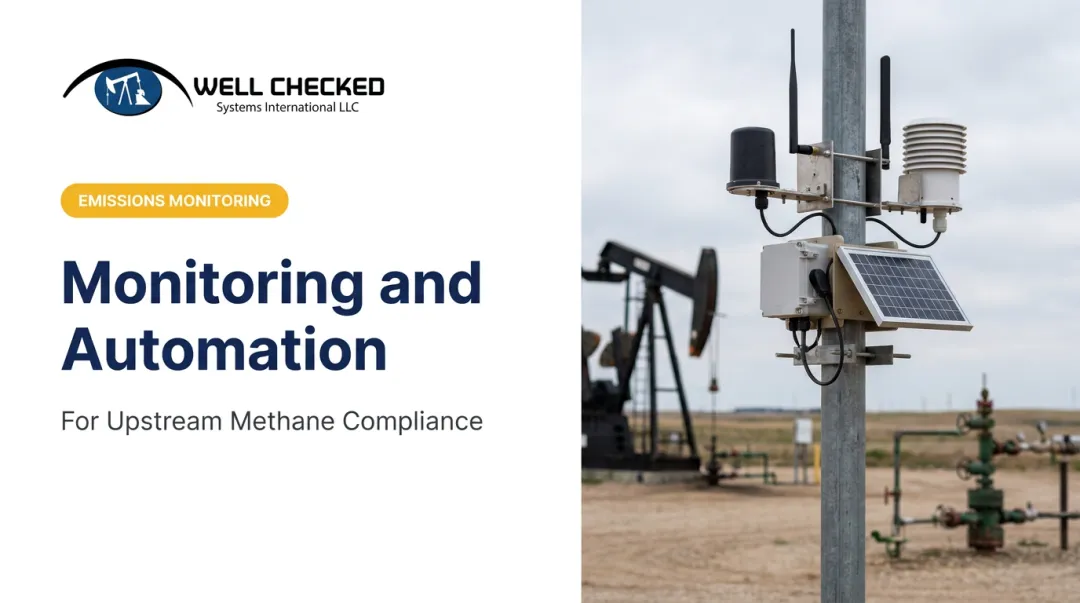
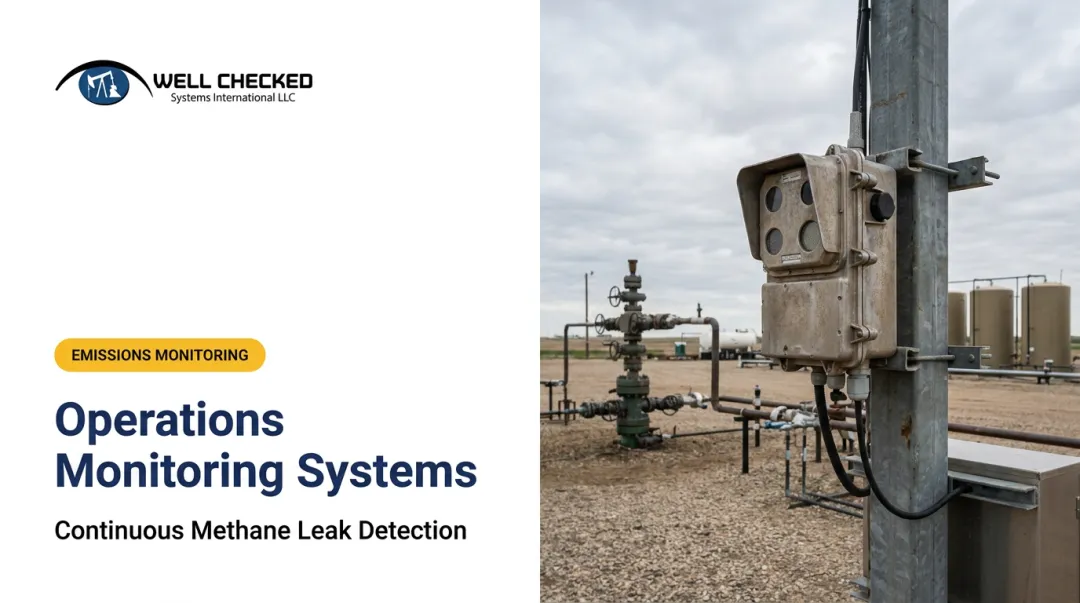
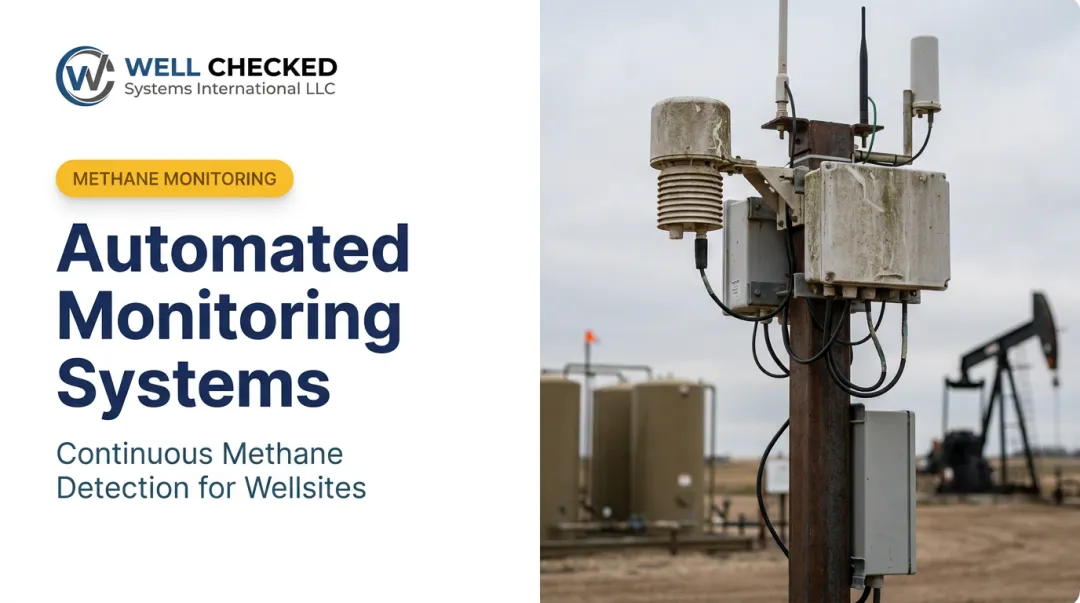
Modern platforms unify cameras, alarms, and access control into one dashboard, using AI-based analytics to flag exceptions instead of forcing security teams to watch every feed manually. Well Checked Systems applies this logic at remote oil & gas wellsites: its Zensory.ai™ platform combines video, acoustic, and infrared gas-imaging sensors to flag only true equipment anomalies and site events across 220+ Appalachian Basin wellsites.

How AI and IoT Are Transforming Surveillance and Monitoring
Artificial intelligence and IoT sensors have pushed monitoring from passive recording into active, predictive detection. Instead of a human watching hours of footage for one relevant moment, AI filters the noise and surfaces only what matters.
Multi-sensor fusion (combining visual, acoustic, and thermal or gas data) is becoming the standard for high-stakes environments where a single camera feed simply isn't enough. Well Checked Systems' Zensory.ai™ platform is a working example of this shift. Deployed across a multi-site program in the Appalachian Basin, the platform combines three sensor types on every wellsite:
- Vision: High-resolution cameras analyzing over 1,500 videos per site daily for object detection
- Sound: Acoustic anomaly AI that flags abnormal equipment noise before it becomes a full failure
- Gas imaging: Long-Wave Infrared cameras performing Optical Gas Imaging to detect methane and volatile organic compound (VOC) leaks, day or night
The system builds a site-specific baseline in roughly two days, learning what "normal" looks like at that particular location. Once established, it cross-references all three sensor types before sending an alert, which is what allows operators to "operate by exception" rather than chase down every routine signal.
None of this works if the system depends on a stable internet connection at a remote site. That's where edge computing matters: processing data locally, on-site, keeps monitoring functioning reliably even with limited connectivity.
This reliability matters most for facilities outside dense urban coverage. Industry surveys back the trend: nearly half of security-solution developers expect AI to reshape strategy within five years, according to the Security Industry Association.
Key Benefits of Investing in the Right Monitoring & Surveillance Setup
Deterrence and reduced incidents. A 2019 systematic review of 76 studies found that CCTV deployment produced an average 13% reduction in crime, with the effect climbing to 37% in parking facilities, according to the Office of Justice Programs. Actively monitored systems outperformed passive recording setups. Cameras don't stop every crime, but visible, monitored deterrence measurably changes offender behavior in certain settings.
Operational efficiency and cost savings. Beyond deterrence, continuous monitoring replaces periodic manual checks that leave gaps between visits. In upstream oil and gas, traditional route-based site inspections can cost mid-sized to large operators $1 million to $5 million or more annually, largely from labor, vehicle, and logistics expenses. Autonomous monitoring redirects that spend toward faster incident response instead of routine, often unnecessary, travel.
Compliance and defensible records. Those efficiency gains extend into compliance too, since industries facing regulatory reporting requirements increasingly rely on continuous monitoring data to satisfy inspection and audit obligations. Continuous, quantified records also hold up far better under regulatory scrutiny than a snapshot from a quarterly inspection.

How to Choose the Right System for Your Needs
Start with the fundamentals before comparing vendors:
- Map your area and scale: a single retail storefront has different needs than a 50-site industrial portfolio
- Account for environment: indoor versus outdoor, lighting conditions, and weather exposure all affect camera and sensor choice
- Set a realistic budget: factor in installation, monitoring fees, and long-term maintenance, not just hardware cost
- Define your priority: deterrence, evidence collection, or real-time operational alerts each point toward different technology
From there, decide whether a single-function system (camera-only or alarm-only) actually covers your risk, or whether you need an integrated, multi-sensor platform. Complex or remote environments usually demand the latter.
Regulated industries make this especially clear. Oil and gas producers managing emissions and safety compliance, for instance, increasingly rely on layered platforms like Zentinal Core™ and Zentinal IQ™, which split detection from quantification:
- Core filters signal from noise and alerts only on confirmed fugitive anomalies
- IQ activates once Core validates an event, then quantifies it for EPA, OGMP 2.0, SASB, and TCFD reporting
That separation matters because it prevents wasted effort on quantifying false alarms, and it gives operators a path to start with detection alone and add reporting capacity later.
Whatever industry you're in, work with a provider experienced enough to assess site-specific risks and tailor sensor types, coverage, and alerting logic accordingly. A generic package rarely fits a facility with unique layout, connectivity, or regulatory pressures.
Frequently Asked Questions
What's the difference between monitoring and surveillance?
Monitoring focuses on real-time operational alerts, using sensors and connected devices to catch problems immediately. Surveillance focuses on recording and deterrence through cameras. Most modern systems combine both functions.
What are the 5 types of monitoring?
The five main types are security/intrusion, environmental, video, operational/process, and remote/IoT-based monitoring. Businesses often deploy several together depending on facility type and risk profile.
What are the 4 types of security systems?
The four core categories are video surveillance, access control, alarm and intrusion detection, and integrated/smart security systems. Most organizations combine at least two for layered protection.
How do I choose the right monitoring or surveillance system for my business?
Start with area size, indoor/outdoor conditions, and budget, then decide whether deterrence, evidence, or real-time alerts matter most. Complex or remote sites, such as industrial facilities or oil and gas wellsites, usually need integrated, multi-sensor platforms rather than single-function systems.
Are surveillance cameras effective at deterring crime?
Yes, though results vary by setting. A widely cited systematic review of CCTV effectiveness studies found roughly a 13% average crime reduction, rising to 37% in parking facilities, with actively monitored cameras outperforming passive recording alone.
Can monitoring and surveillance systems be used in remote or industrial locations?
Yes. AI-enabled, multi-sensor platforms with onsite edge computing now allow continuous monitoring of remote sites, including unstaffed oil and gas wellsites and other industrial locations, without requiring constant human presence or stable connectivity.